Beyond the Final Whistle: Player Retention Tactics After High-Profile Sporting Events
Major sporting events create some of the strongest acquisition opportunities in the betting calendar. The FIFA World Cup, UEFA European Championship, Copa América, Wimbledon, and the Olympic Games bring enormous audiences together, attracting both experienced bettors and players who may only engage with sports betting during headline competitions.
For operators, these events can generate rapid increases in traffic, registrations, deposits, and betting activity. But the acquisition spike is only the beginning. Once the decisive match has ended and attention starts shifting elsewhere, operators face a more difficult question: how many of those newly acquired players will remain active?
A successful tournament campaign should therefore do more than convert temporary interest into a first deposit. It should create the foundation for a longer player relationship built on relevant experiences, consistent engagement, loyalty, and trust.
Major Events and Their Viewership Statistics
UEFA Euro 2024
- Estimated Viewership: Over 300 million viewers worldwide for key matches.
- Betting Volume Increase: 200%.
Copa América 2024
- 2021 Final Viewership: Over 50 million viewers for the Argentina vs. Brazil match.
- Betting Volume Increase: 100%.
Paris Summer Olympics 2024
- Dates: July 26 – August 11, 2024.
- Events: Over 30 different sports, including athletics, swimming, and gymnastics
Copa América Femenina 2025
- Final Viewership: At least 17 million viewers across major measured markets, including Brazil, Colombia and the United States. No consolidated worldwide total was released. US final viewership increased by 273% compared with 2022.
Wimbledon 2026
- Viewership: An average of 853,000 US viewers across ESPN networks, with 2.4 million watching the men’s final.
- Broadcast Viewership Increase: 18%.
FIFA World Cup 2026
- Viewership: Around 6 billion people watched matches of the tournament worldwide.
- Projected Betting Volume: Around $60 billion wagered through regulated sportsbooks globally, which equates to approximately 71% increase compared with the 2022 World Cup.
- Are acquired players returning after one, seven, and thirty days?
- How does their value compare with the cost of acquiring them?
- Which traffic sources produce loyal players rather than one-time conversions?
- How does behavior change after bonuses and promotions end?
- Which cohorts are becoming inactive?
- What action should follow from the data?
Judging by these statistics, it’s clear that operators are thriving, but how sustainable is this success? When the tournament is concluded, and the excitement fades, it shouldn’t signify a pause in engagement. Instead, it should be a launching pad for deeper connections with players. And so, betting operators have a unique opportunity to build and maintain interest and foster loyalty by implementing strategies that keep players engaged long after these high-profile events end.
Acquisition Is a Signal, Not the Final Result
Conversion is usually the first and most visible indication that a campaign is working. A player sees an offer, visits the website, registers, deposits, and places a bet. From a short-term perspective, the campaign appears successful.
But conversion only records an immediate reaction. It does not show whether the player will return, continue depositing, explore other products, or generate enough long-term value to justify the acquisition cost.
An operator can report strong registration-to-deposit conversion while simultaneously attracting low-quality or bonus-driven traffic. Acquisition costs may appear reasonable at first, only to exceed the value generated by those players after 60 or 90 days. Conversion can remain high while retention, ARPU, and profitability decline.
As explored in our guide, Conversion Is a Clue, Not the Answer, conversion should initiate further analysis rather than conclude it. Operators need to evaluate immediate results alongside early retention, player activity, deposit frequency, ARPU, CAC, LTV, ROMI, and cohort performance. You can explore the full guide here
The same principle applies to major sporting events. A World Cup or European Championship may bring thousands of new players to a sportsbook, but their real value depends on what happens after the initial excitement fades.
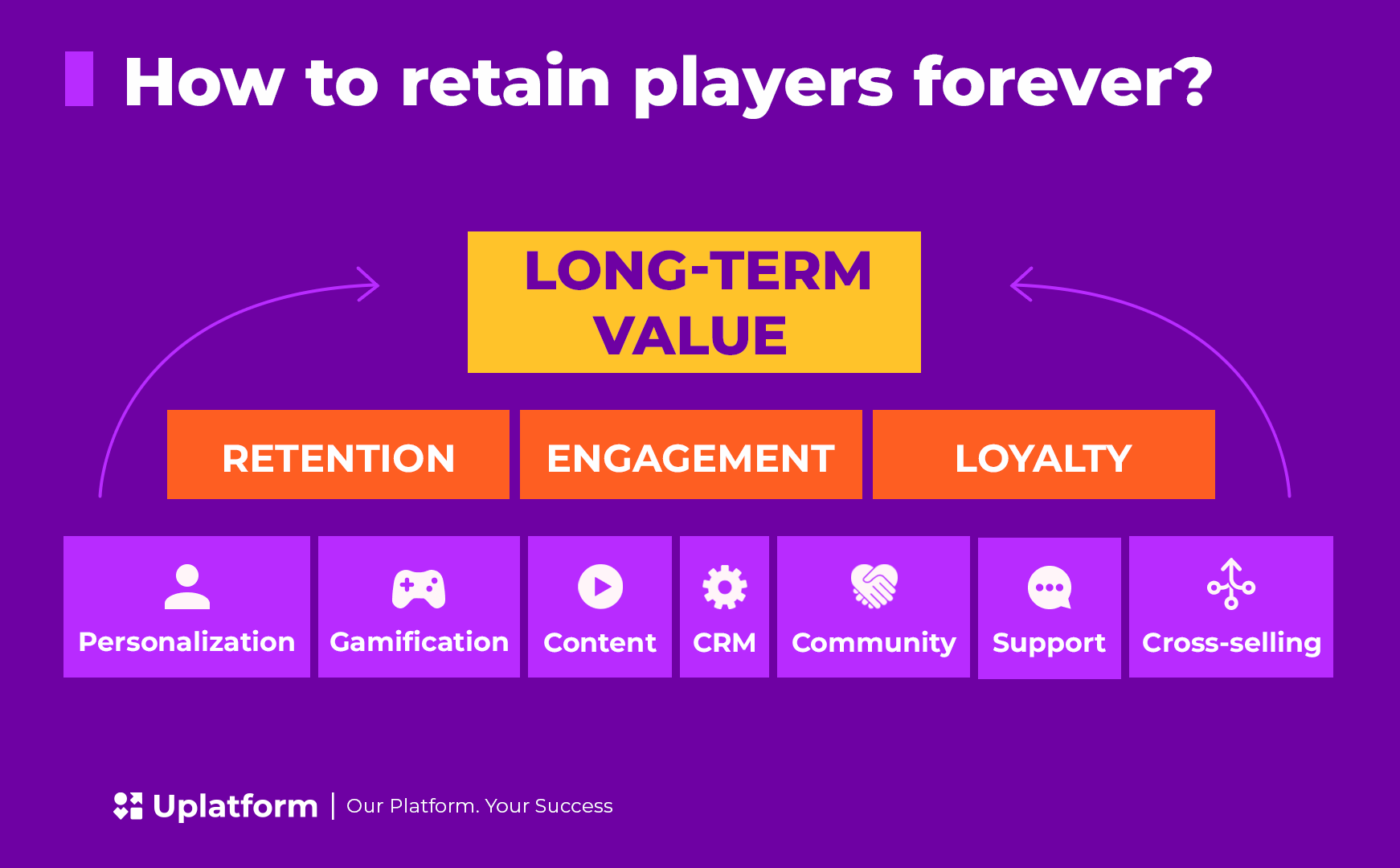
How to Convert Event-Driven Acquisition into Long-Term Player Value
1. Extend the Emotional Connection
Players often arrive during major events because they feel a strong emotional connection to a national team, athlete, league, or competition. That connection should not disappear when the final whistle blows.
Operators can extend it through localized follow-up campaigns built around the teams, players, and markets that originally attracted each audience. A player who supported a national football team may be interested in the team’s upcoming qualifiers, domestic league fixtures, individual players returning to their clubs, or other competitions involving the same country.
Connected campaigns can continue the story instead of treating every tournament promotion as an isolated activation. Post-match recaps, consolation offers, upcoming-event recommendations, and re-engagement campaigns can help move players naturally from one event to the next.
The goal is not simply to repeat the same promotion. It is to use the player’s existing interest as the starting point for the next relevant interaction.
2. Keep Players Active Through Gamification
After a major event, the urgency that initially drove players to the sportsbook can quickly disappear. Gamification gives them additional reasons to return even when no single fixture carries the same level of attention.
Missions, challenges, leaderboards, tournaments, quizzes, reward progress, and achievement systems can transform isolated betting sessions into a longer engagement journey. Instead of asking players to return only for another major final, operators can provide smaller objectives that encourage regular activity.
For example, a football-focused mission could reward players for exploring several leagues, placing bets across different matchdays, or completing a series of weekly challenges. Leaderboards and tournaments can also add a social and competitive element, helping maintain excitement between major sporting events.
These mechanics should be designed around meaningful engagement rather than activity for its own sake. Operators should monitor whether gamified users continue returning after the reward period, rather than judging success solely by participation numbers.
3. Expand Their Entertainment Options
A player acquired through one major football match does not necessarily need to remain limited to football. Once operators understand the player’s interests and behavior, they can introduce other relevant forms of entertainment.
This may include additional sports, Esports, virtual sports, casino content, or niche competitions. Virtual sports can be particularly useful during gaps in the sporting calendar because they provide frequent events and familiar sports-based formats without depending on real-world schedules.
Cross-selling should feel like a relevant recommendation rather than an unrelated sales push. A player who follows football may respond well to football-themed casino content, virtual football, Esports competitions based on football games, or upcoming fixtures in other leagues.
The broader objective is to build an entertainment ecosystem in which players can find something relevant even after the event that originally attracted them has ended.
4. Personalize Every Communication
Generic follow-up messages rarely reflect why a player joined, what they bet on, or what may encourage them to return.
Operators should use behavioral data to personalize emails, push notifications, onsite messages, bonuses, and event recommendations. Communication can be adapted according to preferred sports, teams, markets, deposit behavior, session frequency, previous campaigns, and lifecycle stage.
A player who joined to support a national team should receive different follow-up communication from someone who actively explored several sports and markets. Similarly, a high-value player, an occasional recreational bettor, a bonus-driven user, and a player showing early signs of churn should not receive identical incentives.
Behavioral segmentation helps operators avoid one of the common weaknesses in retention strategies: applying the same communication and mechanics to every user, regardless of value or intent. We at Uplatform recommend distinguishing between high-value players, bonus-driven users, at-risk cohorts, and early-stage players, then adapting retention mechanics to their lifecycle stage and engagement level.
Personalization should also be timely. Operators need to react while the player’s original interest is still active, not weeks after the tournament has ended.

5. Build Community and Social Engagement
Major sporting events are shared experiences. Players discuss predictions, celebrate victories, react to defeats, and compare opinions with others. Operators can preserve part of that social experience after the event through community-driven mechanics.
Prediction contests, community challenges, polls, social leaderboards, discussion content, and user-generated insights can help players feel connected to something larger than an individual bet.
Community activity can also bridge the gap between major fixtures. Rather than waiting passively for the next headline event, players can participate in ongoing discussions, challenges, and competitions linked to domestic leagues, esports, virtual sports, or upcoming tournaments.
The key is to create participation that feels natural to the audience. Community features should complement the betting experience rather than distract from it.
6. Maintain a Consistent Content Strategy
Content gives operators a way to remain relevant even when players are not actively placing bets.
Match analysis, tournament recaps, previews, interviews, educational materials, betting-market explainers, statistical breakdowns, and stories about teams or players can maintain attention between betting sessions. Content can also guide players towards upcoming opportunities they may not have discovered independently.
After a major international tournament, operators can shift naturally into domestic competitions, qualifying matches, transfer stories, club football, or the next major event on the calendar. This creates continuity instead of allowing the communication cycle to stop abruptly.
Content should be localized according to audience interests, language, and regional sporting preferences. It should also be connected to CRM and promotional campaigns so that editorial activity supports the broader retention journey.
7. Plan Campaigns Around the Full Sporting Calendar
Retention should not be improvised after the tournament ends. Operators should map the player journey before the event begins.
A campaign calendar can connect acquisition, tournament engagement, post-event follow-up, reactivation, cross-selling, and loyalty activity into one continuous strategy. Operators can identify in advance which competitions, leagues, product verticals, and content themes will follow each major event.
For example, a football campaign may move from the World Cup into domestic leagues, continental club competitions, international qualifiers, Esports football, and virtual sports. Each stage should have its own audience segments, offers, content, and communication triggers.
Planning ahead also helps operators manage player attention more carefully. Instead of sending disconnected promotions whenever activity declines, teams can build a structured sequence that gradually introduces the next relevant experience.
This approach reduces reliance on isolated event spikes and creates a more stable engagement rhythm throughout the year.
8. Reward Genuine Loyalty
Loyalty programs can encourage players to remain active by recognizing consistent engagement over time.
Points, tier progression, cashback, personalized rewards, reload offers, exclusive tournaments, and tangible benefits can make long-term participation more valuable. Players who feel recognized are less likely to treat the operator as interchangeable with competing websites.
However, operators should distinguish loyalty from bonus dependence. Oversized or poorly targeted promotions may increase short-term conversion while attracting players who deposit only to claim an incentive, complete the minimum requirements, withdraw, and disappear until the next offer.
Aggressive bonus campaigns can create strong conversion figures while long-term retention remains weak. In these cases, surface-level activity hides low sustainable value and poor profitability. Rewards should therefore support continued engagement rather than distort it. Operators need to track post-bonus retention, deposit frequency, ARPU after promotional periods, and player behavior once the incentive ends.
9. Deliver a Frictionless Experience
Retention strategies cannot compensate for a poor product experience.
Slow loading times, complicated navigation, unsuitable payment methods, failed deposits, unclear bonus conditions, limited localization, and technical instability all give players reasons to leave. The risk becomes particularly visible during major events, but the consequences continue afterwards.
A frictionless experience should include intuitive navigation, responsive mobile performance, relevant sorting, localized language and content, familiar odds formats, suitable payment options, and a smooth transition between sportsbook, casino, esports, and virtual-sports products.
Operators should also review the early player journey carefully. Poor onboarding and weak product adoption can damage D1 and D7 retention long before declining revenue becomes visible.
The objective is not only to help players complete their first action. It is to make every subsequent interaction easy enough that there is no unnecessary reason to switch brands.
10. Provide Reliable and Proactive Support
Customer support is an important part of the retention experience, particularly when players encounter payment problems, account-verification delays, bonus questions, or technical issues.
Fast, multilingual, and knowledgeable support can prevent a temporary issue from becoming a permanent loss of trust. Operators should provide clear communication across the channels their audiences prefer and maintain sufficient support coverage during both peak events and normal periods.
Support should also be proactive where possible. If data shows that a particular player group is repeatedly encountering the same difficulty, operators should address the underlying product or communication issue rather than waiting for more complaints.
A smooth resolution can strengthen loyalty, while an unresolved problem can undo the value of an otherwise successful acquisition campaign.
Measure What Happens After Conversion
Retention strategies need to be evaluated through more than immediate campaign results.
Daily monitoring can help operators detect changes in registrations, first-time deposits, deposit activity, and session starts. Weekly analysis should examine early retention, session-duration trends, ARPU, and changes in player behavior. Monthly reviews should connect D30 retention, LTV, CAC versus LTV, ROMI, and cohort profitability.
This monitoring structure matters because metrics only become meaningful when viewed in context and over time.
A post-event campaign may produce a strong response rate without generating lasting engagement. Reload offers may reactivate dormant players temporarily but fail to change their underlying behavior. A gamification campaign may attract participation while having little effect on deposits, retention, or value.
Operators should therefore ask:
Conversion reflects immediate reaction, not overall business health. Sustainable performance emerges when conversion, retention, and player value move together.
Is Your Sportsbook Ready for What Comes Next?
Major sporting events can open the door to rapid acquisition, but long-term growth depends on what operators do after players enter.
Uplatform helps operators manage the complete player journey, from acquisition and first-time conversion to engagement, retention, and long-term profitability. Integrated analytics, behavioral segmentation, localized experiences, extensive sports and esports coverage, CRM capabilities, bonus mechanics, and cross-selling opportunities allow brands to identify risks, understand player quality, and respond to changing behavior.
Operators can integrate Uplatform’s sportsbook as a standalone iframe solution or access it as part of the full turnkey platform. The iframe provides extensive sportsbook coverage for brands that already have their own website, while the turnkey platform combines the sportsbook with the wider infrastructure required to manage payments, CRM, bonuses, affiliates, localization, analytics, and ongoing player relationships.
Because successful retention requires more than a strong betting line. It requires the ability to understand what players do next, and to give them a relevant reason to return.
Other news
-
 From Operator Wish List to Everyday Reality
28.09.2026
-
- Player Engagement in iGaming: Operator Guide
01.09.2026
- SEO & AEO Strategies for iGaming in 2026
18.08.2026
- What Asian iGaming Market Really Demands
30.06.2026