Casino platform provider: Payments and Integration
Payments have always shaped the player experience in iGaming, even when many casino platform providers treated them as a technical afterthought. Every failed deposit, slow withdrawal, or missing local method creates friction players immediately notice.
Today, that friction has real commercial consequences. Payment performance influences conversion, retention, regulatory compliance, and the ability to operate efficiently across multiple markets. For operators, payments are not a technical checkbox but a core operational decision.
A strong casino platform provider gives operators the foundation to run payments securely, reliably, and in line with regional expectations. Knowing how payment systems work is essential for anyone building or expanding an online gambling operation. At Uplatform, we see these challenges daily when supporting operators entering new and highly regulated markets.
1. Understanding the Payment Landscape
Every hour, operators handle thousands of deposits, withdrawals, verification actions, and compliance checks. These interactions must be quick, transparent, and secure, because they touch the most sensitive part of the user journey.
Players expect convenience above everything. Deposits should clear within seconds. Withdrawals should not be delayed without explanation. If a player encounters friction more than once, the likelihood of churn increases dramatically.
Regulators, on the other hand, require accuracy and traceability. Licensing frameworks often mandate identity verification, income checks, anti-money-laundering screening, responsible gambling controls, and detailed transaction audits. An operator that lacks the technical infrastructure to support these processes risks fines or license suspension.
Payment Service Providers require consistency. They expect operators to follow standards for transaction routing, settlement, and security. If an operator’s website sends unstable or incomplete data, PSPs may impose higher fees, block certain methods, or terminate service.
This three-way pressure shapes the entire architecture of iGaming payments.
A major factor is regional variation. Payment behaviors differ not only by continent but by country. A method that converts exceptionally well in Europe may be irrelevant in Africa. A trusted solution in Asia may not exist in Latin America. Here are the general patterns:
- Europe prefers card payments, SEPA transfers, and digital wallets.
- Africa operates largely on mobile money infrastructure.
- Asia leans toward e-wallets, bank transfers, and prepaid systems.
Operators that enter new markets without adapting their payment stack face higher decline rates, slower conversions, and reduced player trust. A provider with broad payment coverage allows operators to expand without rebuilding systems for every region.
Modern payment workflows must combine speed, compliance, and flexibility. The diversity of methods players use today makes a one-size-fits-all approach ineffective. Operators need infrastructure that can grow and adjust as the market evolves.
2. Payment Methods Overview
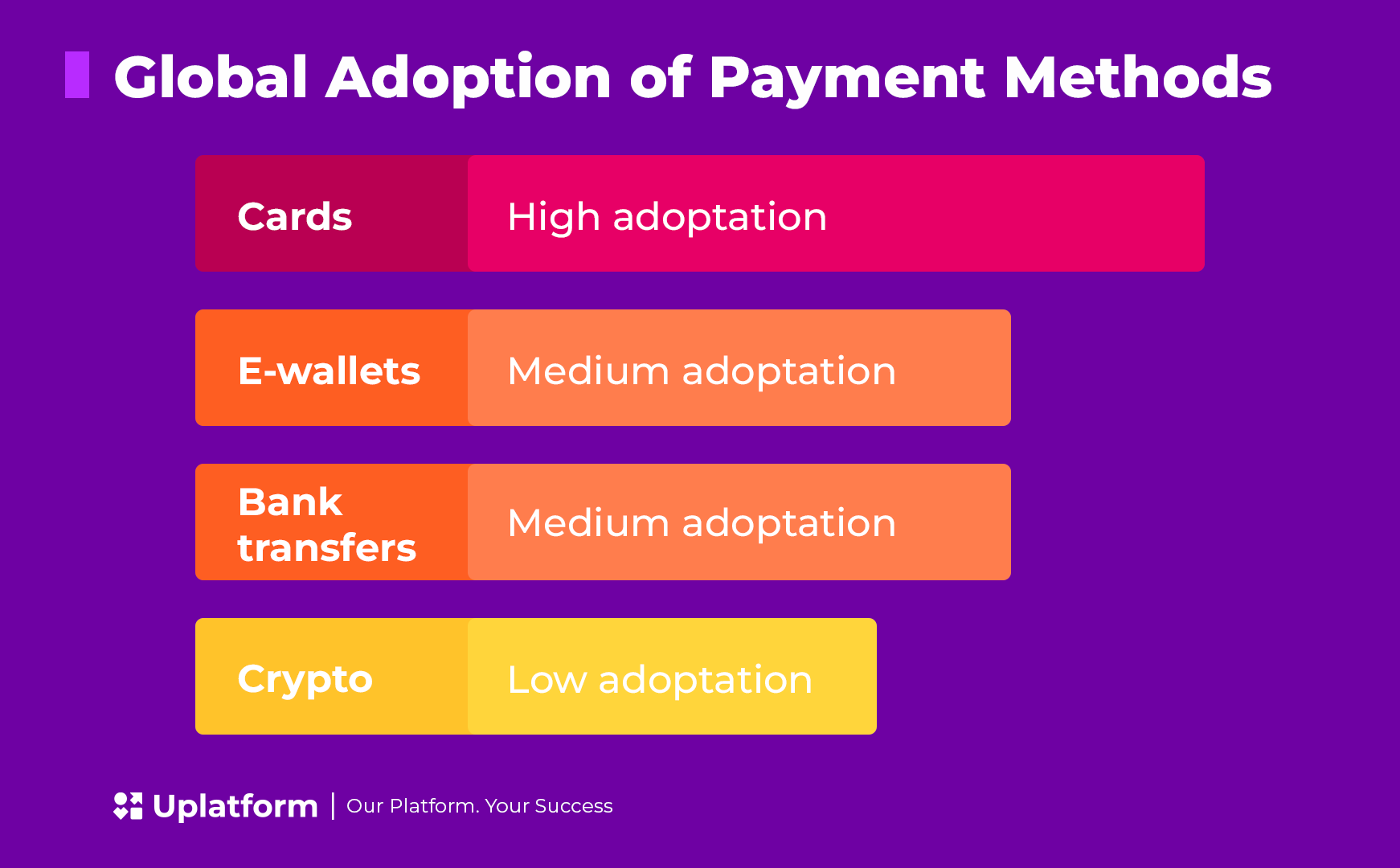
A successful iGaming operation must offer a wide range of familiar and reliable payment methods. Players often deposit impulsively, and if their preferred method is missing or inconvenient, they leave the website without completing the process. Payment variety directly affects retention, lifetime value, and overall satisfaction.
Below is an expanded look at the most important payment categories.
Card Payments
Visa, Mastercard, and Maestro continue to dominate many regions. Their global presence, ease of use, and instant authorization make them essential. For operators, card payments require integration through PSPs that route transactions through acquiring banks. Proper routing improves approval rates, especially in markets where issuing banks frequently decline gambling transactions.
Card payments are also subject to strict compliance rules. Operators must handle secure tokenization, PCI DSS requirements, and transaction monitoring. When done correctly, cards remain one of the most stable pillars of iGaming payment flows.

E-Wallets
Digital wallets such as Skrill, Neteller, PayPal, and ecoPayz offer faster payments, higher privacy, and often better approval rates than cards. Players appreciate the separation of their gambling funds from their main bank accounts. Operators like them for reduced chargebacks and smoother cross-border processing.
E-wallets also support instant withdrawals, which is a major competitive advantage. When players can withdraw quickly, trust grows, and retention improves. Some markets even treat e-wallets as the primary deposit method.
Bank Transfers
Bank transfers suit players who prefer traditional financial channels. They are widely used for larger deposits and withdrawals. In some regions, transfers are considered safer or more legitimate than cards.
Instant bank transfer systems have changed the landscape significantly. In Europe, solutions built around open banking allow players to authenticate with their bank and complete a transfer within seconds. This bridges the gap between traditional banking and instant digital payments.
Prepaid Vouchers
Prepaid solutions like Paysafecard cater to users who want to control their spending, maintain privacy, or avoid using their bank details online. These vouchers are popular among younger audiences and in regions with lower financial inclusion.
Prepaid systems generally support only deposits, not withdrawals. Operators need additional methods to handle cashouts, usually via bank transfer or e-wallet. Despite this limitation, prepaid vouchers remain a valuable part of the payment mix.
Mobile Payments
Mobile carriers and mobile wallets play a defining role in regions with limited card penetration. In parts of Africa, mobile money is the primary financial infrastructure. Players deposit using only their phone number, and funds move instantly between accounts.
Mobile payments reduce friction and bring gambling accessibility to markets where banking services are limited. Their simplicity and reliability make them indispensable for operators focusing on emerging regions.
Offering all these methods gives players flexibility and helps operators meet the expectations of various demographics and regions. A strong payment portfolio improves conversion rates and minimizes abandonment during the deposit flow.
3. PSP Integration
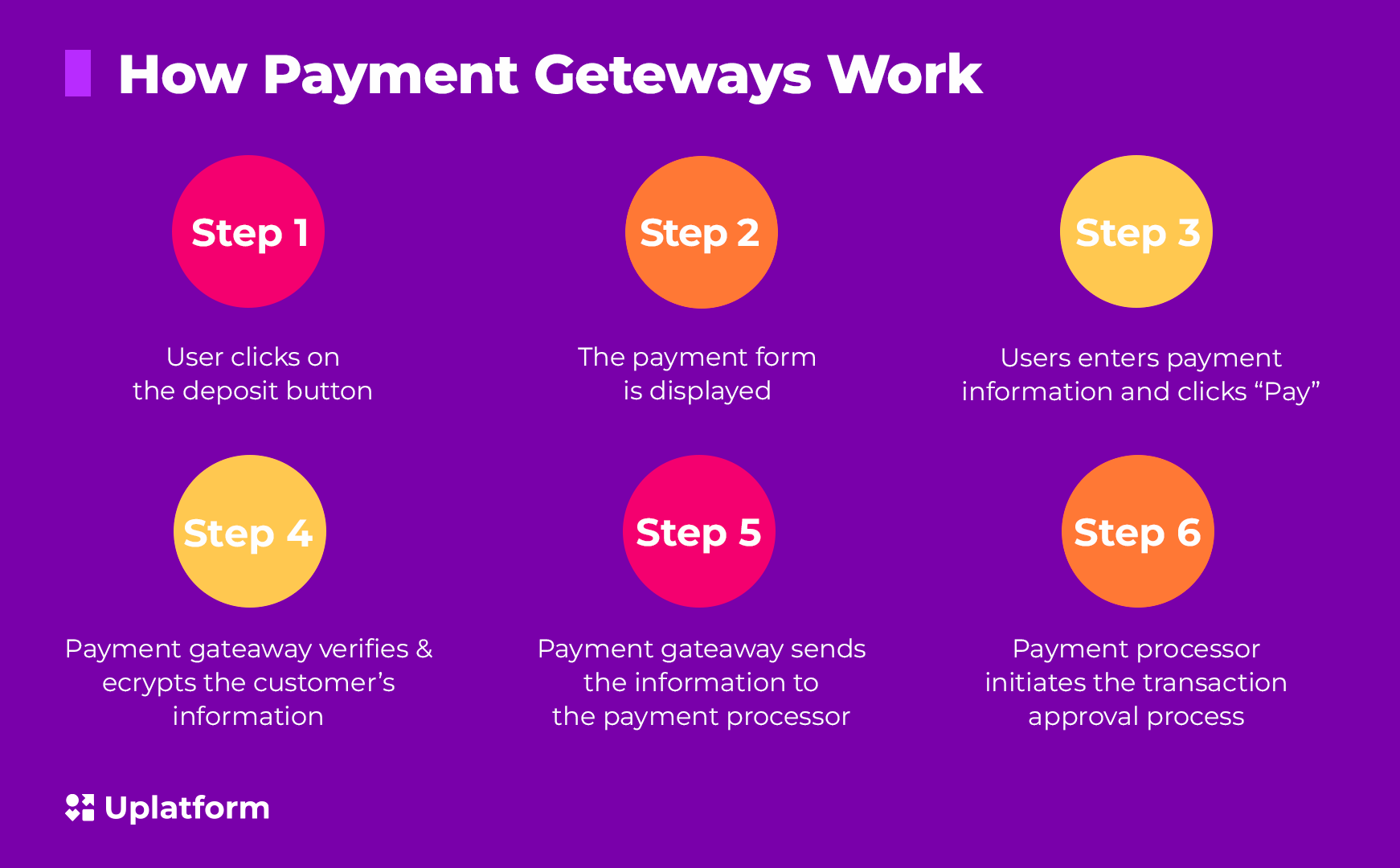
Payment Service Providers sit between the operator’s website and the financial networks that process transactions. A good PSP reduces complexity, consolidates payment methods, and ensures compliance with global standards.
Instead of building separate connections to each card scheme, e-wallet, or bank, operators integrate a single API that handles multiple routes. This simplifies development and maintenance. PSPs also provide essential infrastructure such as encryption, fraud screening, currency conversion, and reporting tools.
When evaluating a PSP, operators must consider several factors:
- Transaction fees and pricing transparency
- Settlement times for deposits and withdrawals
- Supported currencies and local payment methods
- Geographic coverage and regional licensing
- Stability of the API and historical uptime
- Fraud and risk management tools
A PSP that performs well in one region may not necessarily excel in another. That is why many operators use multiple PSPs. This ensures redundancy, better routing, and optimized approval rates.
For iGaming, reliable PSPs also handle the industry-specific challenges of chargebacks, high-volume withdrawals, and compliance audits. Their infrastructure must support large spikes in traffic during peak hours or major sport events.
4. Fraud Prevention
Fraud is one of the most critical concerns in iGaming, driven by the high speed of transactions and the presence of bonuses that attract bad actors. The most common threats include identity fraud, payment fraud, chargebacks, multi-accounting, and bonus abuse.
Effective fraud prevention requires several layers of protection:
KYC and AML verification
Identity checks confirm that a player is who they claim to be. These procedures include document verification, database checks, and proof of address. AML screening looks for suspicious behavior such as rapid deposits and withdrawals, mismatched identities, or transactions linked to high-risk jurisdictions.
Real-time transaction monitoring
Platforms must flag unusual activity such as repeated failed deposits, sudden spikes in bet sizes, or rapid deposit-withdrawal cycles. Automated alerts help operators intervene before significant damage occurs.
Multi-factor authentication
Requiring an additional verification step strengthens account security and reduces unauthorized access. This protects both the player and the operator.
Behavioral analytics
Advanced platforms use behavior-based detection to identify irregular betting patterns or deposit habits. This is particularly effective against bonus abuse and multi-accounting.
Chargeback management
Chargebacks cost operators money and can damage relationships with PSPs. Proactive management includes proper documentation, dispute handling, and clearer payment descriptors to reduce misunderstandings.
A strong fraud management system builds trust and reduces financial losses. It also helps operators remain compliant in jurisdictions where responsible gambling and AML requirements are becoming stricter each year.
5. Regional Payment Preferences
One of the biggest challenges for iGaming businesses is adapting to regional differences. Payment culture varies widely across the world.
Europe
Players rely on cards, SEPA transfers, and e-wallets. Instant payments are becoming the standard. Operators must support multiple currencies and offer fast withdrawals to stay competitive. Compliance is strict, so transparency and documentation are essential.
Africa
Mobile money dominates the region. Services like M-Pesa and Airtel Money give millions of users access to financial tools without needing bank accounts. Operators that do not offer mobile money often fail to capture the majority of potential players.
Asia
Asia’s payment environment is diverse. E-wallets, mobile banking, and domestic bank transfers are common. Prepaid vouchers are also widely used in countries where players prefer controlled spending.
Mobile optimization is mandatory, as many players access gambling services primarily through smartphones.
Americas
Payment habits vary between North America and Latin America. Cards, PayPal, and domestic bank transfers are common in the United States and parts of Canada. Latin America relies heavily on local banking tools, cash-based vouchers, and region-specific wallets.
Adapting payment methods to local preferences is essential for conversion. A mismatch between user expectations and available options results in lower approval rates and weaker player retention.
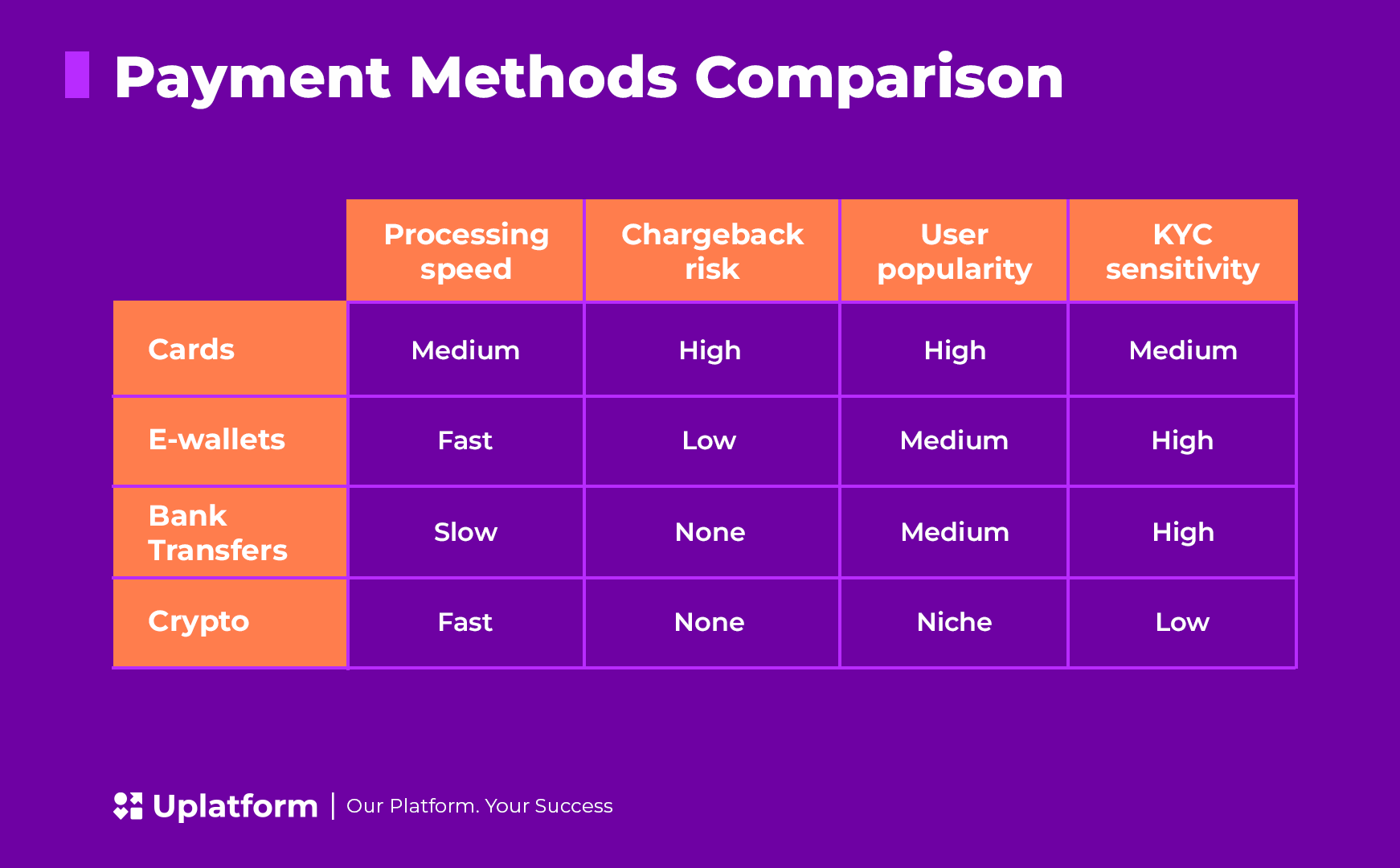
6. Crypto Payments
Cryptocurrency has become an increasingly relevant payment method in the iGaming sector. Crypto appeals to players who value speed, privacy, and independence from traditional banks.
Key advantages of crypto in iGaming include:
- Faster settlement times compared to traditional banking
- Higher privacy, as users do not need to share banking details
- Lower transaction fees in many cases
- Global accessibility, especially in regions with limited financial infrastructure
- Flexibility during periods of local banking restrictions
Operators must handle wallet management, conversion processes, and compliance standards adapted to crypto transactions. In some markets, crypto payments operate under specific regulatory requirements, while in others they remain unregulated or restricted.
The volatility of cryptocurrencies can be a challenge, although stablecoins reduce this risk by maintaining a fixed value relative to major currencies. When implemented correctly, crypto payments help operators reach broader audiences and offer an additional layer of convenience.
7. Optimization Strategies
Payment optimization directly affects revenue. If a player struggles to deposit or withdraw, they rarely return. Creating efficient workflows reduces drop-offs and increases the lifetime value of users.
Key optimization strategies include:
Multi-currency support
Allowing players to transact in their local currency prevents unnecessary conversion fees and improves trust. It also simplifies accounting for the operator.Clean user interface
Deposit and withdrawal flows must be intuitive. Unnecessary steps increase abandonment. Players should clearly understand fees, processing times, and verification requirements.
Fast withdrawals
Speed is one of the strongest differentiators in iGaming. Operators that offer near-instant withdrawals consistently outperform those with longer processing times.
Real-time analytics
Continuous monitoring of payment performance helps operators identify issues such as declining approval rates, regional outages, or method-specific problems.
Multiple PSPs
Relying on several PSPs allows for dynamic routing, which improves approval rates and provides redundancy if one provider experiences downtime.
Localized promotions
Some operators use targeted bonuses or incentives tied to specific payment methods. This encourages players to adopt more reliable or cost-efficient options.
A platform provider that offers these optimization tools gives operators the ability to scale efficiently in competitive markets.
Other news
-
 From Operator Wish List to Everyday Reality
28.09.2026
-
- Player Engagement in iGaming: Operator Guide
01.09.2026
- SEO & AEO Strategies for iGaming in 2026
18.08.2026
-