Case 2: When High Conversion Hides Weak Growth

TL;DR
For an operator, a rise in conversion is only an early signal. Operators must compare it with retention, ARPU, LTV, engagement, and acquisition cost before calling growth successful. Uplatform, a proven iGaming platform provider, shares insight for startup and expanding iGaming businesses, assessing whether early conversion is becoming sustainable growth.
Lead
The numbers came in just after midnight. A new onboarding flow had gone live, with mouth-watering bonuses, fewer steps to follow, and faster deposits. By morning, conversion was up 27%, and registrations skyrocketed. And of course, first-time deposits increased. The dashboard looked exactly how every operator wanted it to look.
By noon, shouts of “It worked! It worked!!” filled the air.
But here’s the big question no one asked: What, exactly, worked?
Why the Result Looks Positive
In iGaming, conversion is often the first signal teams reach for. It’s immediate and moves quickly. It gives a clear answer to the top question on people’s minds: “Did people respond?”
High conversion means players responded to the offer. It does not automatically mean the website or campaign created sustainable growth.
And in most operating iGaming environments, speed matters. Teams are under pressure to validate ideas fast. A lift in conversion would naturally feel like proof that something tangible is happening.
As Dina Head of B2B Projects at Uplatform puts it, conversion is “the first and most noticeable signal that a given strategy is working.” It tells you the audience is reacting right here, right now.
So when it rises, it can logically make operators feel that players are responding, that the product resonates with the audience, and that they are going in the right direction.
Why question a number that moves exactly how you want it to? Well, here’s why…
The First Clue
But a few weeks later, the first inconsistency appeared.
The new players weren’t coming back.
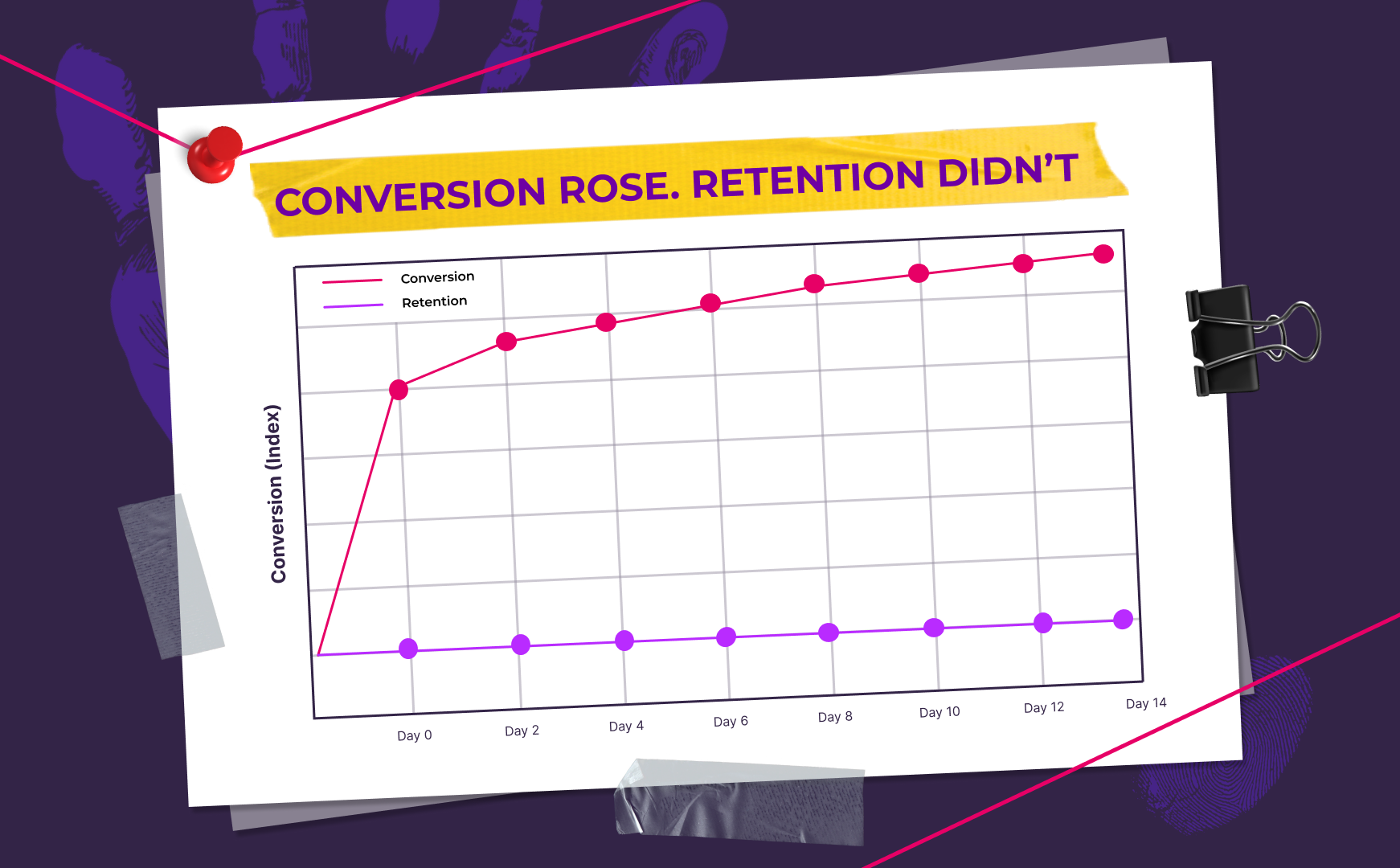
Retention curves, Day 7 and Day 14, which should have bent upward with a stronger first experience, remained unchanged. Some metric curves even softened. This suggested that early activity wasn’t converting into sustained engagement. It was the first clue that the story might not be complete.
Then came the second.
The Second Clue
The deeper the team looked, the quieter the story became.
ARPU (Average Revenue per User) hadn’t increased, nor had LTV (Lifetime Value) shown any real change. Engagement, which consists of sessions, frequency, and time spent, remained exactly where it had been before.
The increase in conversion had not carried through to the metrics that determine sustainable growth. What looked like momentum at the surface hadn’t extended beneath it.
The pattern was becoming clearer; more users were entering the system, but nothing fundamental had shifted once they were inside.
This is where many teams misread the signal.
The Real Diagnosis
As Dina warned, short-term gains can easily “hide less effective work in other areas… user loyalty may drop, but these problems stay behind the curtain.”
Conversion captures a moment, a decision, a click, a response. But it does not, on its own, measure the quality of that decision or the durability of the experience that follows.
In this case, the product hadn’t become more valuable as one would think; it had simply become more effective at prompting action.
Simply put, the promotion was generating reactions, not commitment.
That distinction matters.
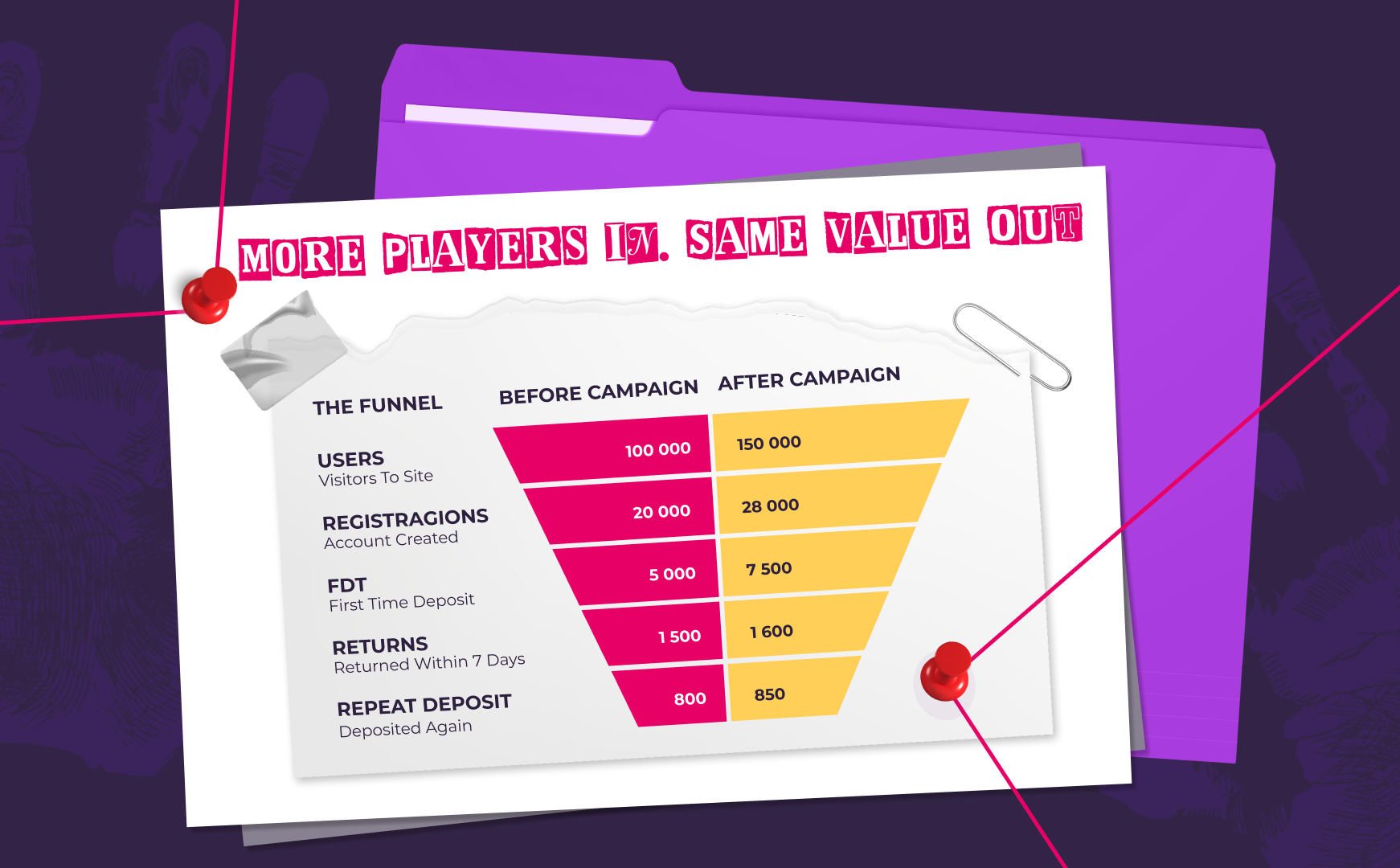
When conversion rises without a corresponding lift in retention, revenue, or engagement, it often points to a surface-level improvement, clearer messaging, stronger prompts, or reduced friction. These changes can increase entry without improving what happens after.
For operators running an online gambling platform, this difference is critical because growth is not defined by how many players enter once. It is defined by how many return, deposit again, engage longer, and create value over time.
What Operators Should Do
The main challenge is that investigations are often closed too soon. Conversion should never be read in isolation.
Every increase in conversion needs to be tested against what follows:
- Do players stay?
- Do they engage more deeply and consistently?
- Does value accumulate over time?
- Is player acquisition cost justified by lifetime return?
Without these confirmations, conversion is an incomplete signal and not a conclusion.
Atomic answer: Operators should treat conversion as a starting signal, not a success verdict.

Case Conclusion Report
In the end, this case wasn’t a question of failure or product breakdown. It was about a misinterpreted metric. The team had optimized for the beginning of the journey and assumed it reflected the whole.
It didn’t.
But this case raises a bigger question:
How many “successful” campaigns are built on the same assumption?
How often does conversion move… while value stays behind?
Dina, Head of B2B Projects at Uplatform, has seen this pattern play out across operators, where strong conversion creates the illusion of growth while deeper metrics quietly tell a different story.
Her full perspective goes further into how these misreads happen, where operators lose value, and what actually drives sustainable performance.
Uplatform takes this investigation further in its recently released ebook, “Conversion is the clue, not the answer.”
Final Takeaway
Before you celebrate the next spike in conversion, we’ll leave you with these few words: Rethink conversion as a starting point.
Other news
-
 From Operator Wish List to Everyday Reality
28.09.2026
-
- Player Engagement in iGaming: Operator Guide
01.09.2026
- SEO & AEO Strategies for iGaming in 2026
18.08.2026
-