The 2026 World Cup Will Bring The Biggest Wave of New Players
Every World Cup produces a surge of new bettors. However every World Cup also produces a problem that is ignored among the post-tournament reports. The problem is the most predictable pattern in sports betting: people leaving after the big event and never coming back. 2026 is going to deliver the largest version of it.
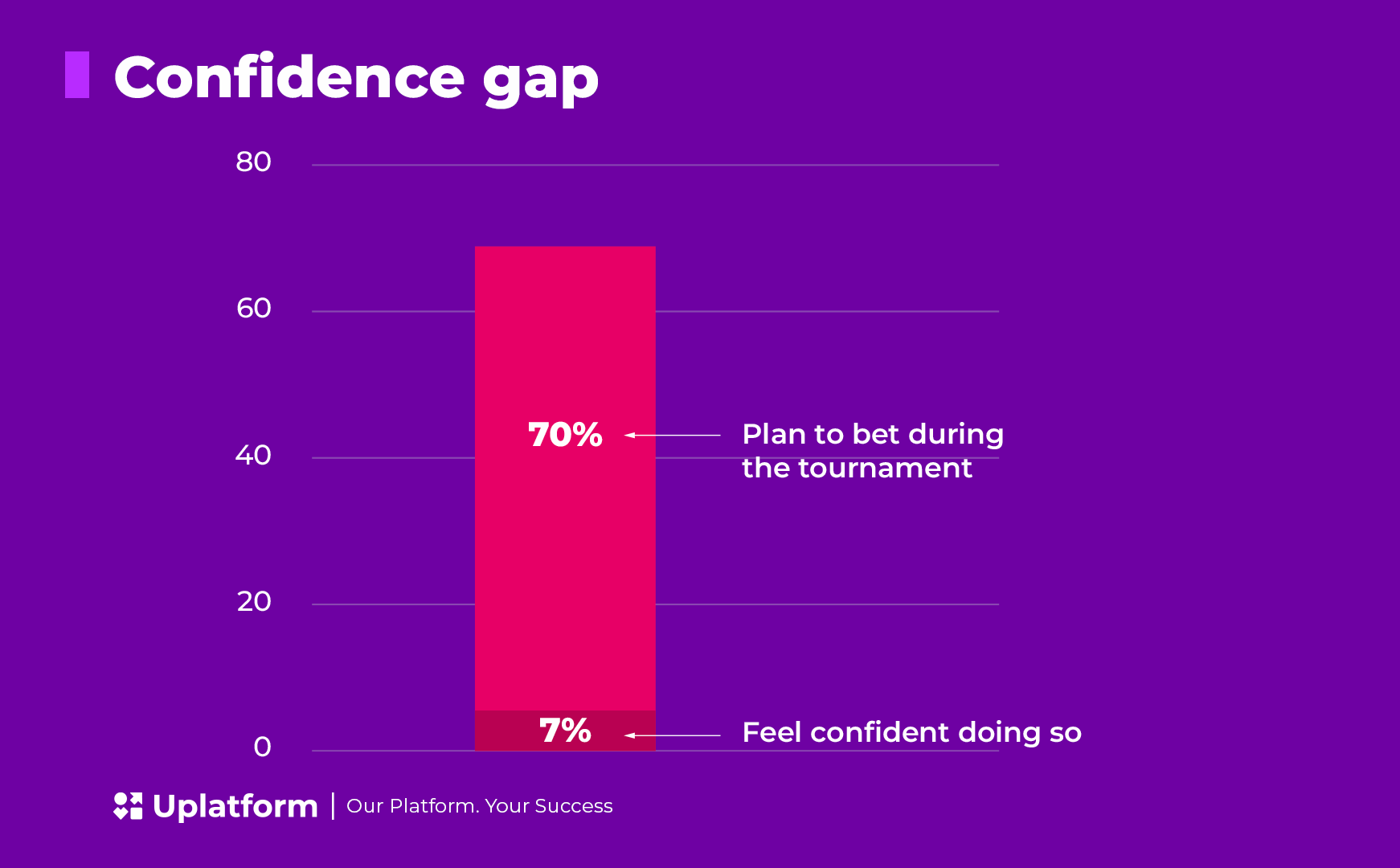
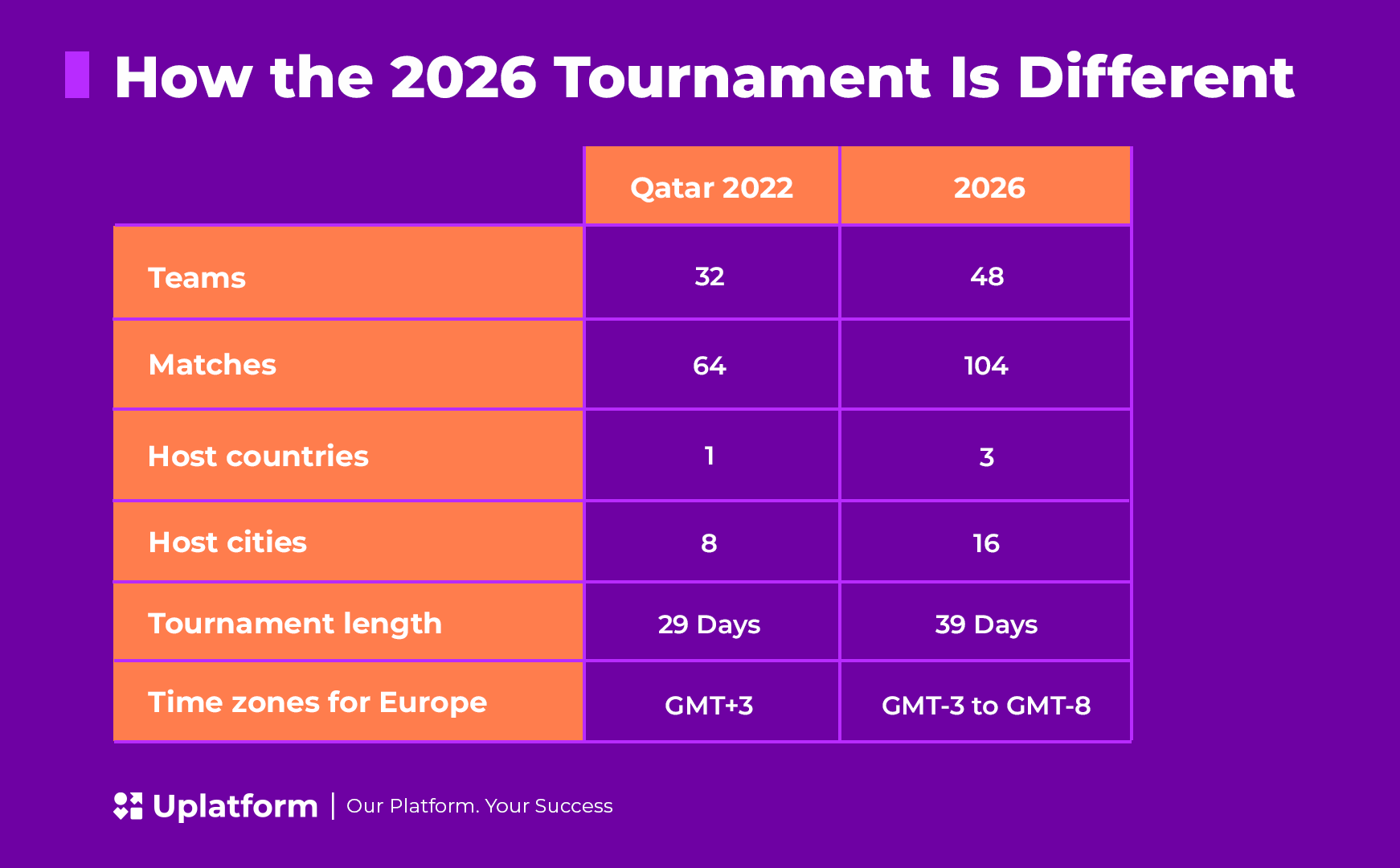
The numbers around the tournament are familiar to anyone working in the space by now. 48 teams, 104 matches, three host countries, and 66% of those planning to bet on the tournament have never wagered on a World Cup before, according to research from Spotlight Sports Group published in late 2025. The same study found 70% of fans plan to place a bet, but only 7% feel confident doing so.
That acquisition window is going to take care of itself. The marketing budgets are allocated, the affiliates are on standby, and most operators will have an excellent chart of player acquisition through July. What matters, the question that actually decides whether 2026 will be a good year for an operator, is what will happen in August.
Acquisition and retention are normally treated as two separate conversations. Well they are not. Whatever a first-time bettor experiences during the tournament is the retention strategy. It is about how they were brought in, the first betting experience they’ve had, and what’s waiting for them when it ends. There’s no fixing it later.
The second screen
Start with the simplest observable fact about how this World Cup will be consumed.
People are going to watch the matches on a television, or a streaming feed, or a bar projector. And while they are watching, they will be holding a phone, and the phone will have a sportsbook app open on it. The match is on the big screen. The phone is in the hand. The two are running in parallel for ninety minutes plus added time, and the bettor is switching between them constantly.
It is how a substantial share of sports betting happens, and the World Cup is going to make it the default mode rather than the secondary one.
For operators, this is more significant than it first appears, because it changes when betting decisions actually get made. The traditional model of engagement assumed sequential attention. They researched the match. They placed the bet. They watched the game. They collected or they didn’t. The pre-match window was the moment of commercial value, and the match itself was passive entertainment.
Live streaming betting closes that timeline. The pre-match decision is no longer the high-value moment. The high-value moment is the 34th minute, when a team that was supposed to win is suddenly losing, and the players look down at the phone in their hand. The app or a website either gives them a reason to act, or it doesn’t. Multiply that by 104 matches, by hundreds of in-match moments, by millions of players with their phones open, and the implication is clear enough. The match itself is a commercial event.
This is the part most operators understand but haven’t fully built around. In today’s world live betting is more important than pre-match betting. The market depth, the latency, the speed at which odds adjust, the interface clarity. These are the things that determine whether the bettor with the phone in their hand places the wager, or just watches the moment pass and goes back to the match.
The Uplatform sportsbook was built with live betting as an important part of the product rather than as a layer on top of pre-match. That shows up in market depth during a match. Not just the next goal or final result, but the detailed live markets players reach for when they’re watching: minute of the next card, total and next corner, multi goals, total time and many others. The operators who treat the live experience as the main focus, and the pre-match as the supporting layer around it, are the ones positioning themselves correctly for how players will behave in this tournament.
The time zone
The other reality of this tournament, particularly for operators serving European and Asian markets, is the time zone gap. The 2026 World Cup is hosted across the United States, Canada, and Mexico. For European audiences, that means a kick-off schedule running from late evening into the early hours of the morning, with the deepest tournament rounds landing well after midnight in most markets. For Asia it will be even later with first matches starting well after midnight and running all the way through the night.
This is usually treated as a problem of total viewership. Late kick-offs mean smaller audiences, lower engagement, reduced commercial value. This framing is incomplete and probably wrong.

The audience that stays up until 2am to watch a quarter-final is not the casual viewer who flips on the TV during dinner. It is a committed fan with a real stake in the outcome. These types of players have lower energy, shorter attention, and less patience for friction than the same person watching at 8pm. They are not reading a thousand-word preview before kick-off, they are ready to bet on whatever feels right in the moment.
Which is, again, a live betting problem rather than a viewership one. The European audience for this tournament is going to be smaller in raw numbers than past World Cups, but the share of that audience reachable through live betting rather than pre-match is going to be higher than ever before.
The mobile experience and user interface (UI) matters here. As we’ve discussed before, most of the players are betting from the phone. The full path from match event to placed bet has to be inside the mobile app or on a mobile browser, in two or three taps, with no issues in between. The operator who builds that path well captures the late-night European audience.
The wave of players
This point gets lost in the strategic planning about the tournament. A World Cup acquisition wave is not a smooth curve. It is a series of sharp peaks aligned with high-interest matches, surrounded by relatively flat periods. The opening match produces a spike. Every match involving the US, Mexico, or Canada produces a spike. Every late-stage match involving a major nation produces a spike. The final produces the largest spike in the history of the operator.
What every one of those spikes has in common is that they arrive at the same time across the entire player base. Hundreds of thousands of bettors, in some cases millions, opening the app within the same five-minute window. Placing bets in the same minute. Hitting the same markets. Trying to cash out at the same moment after the same goal.
The product that handles those moments smoothly is the product that will keep their player base the most. The one that freezes, throws errors, or loses a bet in the system, will lose their players as they will walk away from and never come back to. A first-time bettor whose first World Cup bet fails to settle because the website stalled at full time is not going to give the operator a second chance. They are going to close the website or an app and tell their friends what happened. The reputational damage of an outage during a major moment is far greater than the technical issue, and it lands precisely on the audience the operator was trying to acquire.
Uplatform’s approach to this has been shaped by years of running sportsbook operations through high-volume periods across multiple regions. We have placed a lot of effort into creating a fast, stable and scalable product that will keep up with the busiest operations.
Don’t forget about the retention
Which brings the argument back to the framing.
The new player acquired during the World Cup is not a separate group from the player retained after the tournament. They are the same player. What determines whether they convert from the first into the second is what happens during the six weeks of the tournament itself.
The first-time bettor arriving in June is not arriving with low expectations. They are arriving with the expectations set by every other consumer product they use. The streaming services that load instantly. The food delivery apps that confirm in two taps. The messaging platforms that never lose a message. Their bar for what a digital product should feel like is calibrated by experiences far outside of iGaming, and they will judge a sportsbook by the same standards whether the operator likes it or not.
A first bet that goes through cleanly, on a match the player understands, with a clear and honest experience around it, produces a returning player. A first bet that involves friction, confusion, technical errors, or a sense that the product is not built for them produces a deleted app. There is very little in between. The bettor does not return to a sportsbook that they had a bad first experience with, regardless of how much was spent on the marketing that acquired them in the first place.
So the operators who win the long game in 2026 are not going to be the ones who spent the most on acquisition. They will be the ones who built clear paths through their product for players who didn’t really know what they were doing. The ones who made the live experience feel natural for people. The ones who made sure the website held up at the moments when the entire player base tried to act at once.
Everything else, the marketing campaigns, the bonus structures, the affiliate deals, the brand work, is supporting context for what actually matters, which is the experience of the betting itself.
This is what Uplatform was built to deliver. The in-house Sportsbook API gives operators deep coverage that helps sustain players engagement and revenue well beyond major sporting events, with 1.5M+ events a year across 200+ sports and 60+ Esports, with our own bookmakers setting the odds that ensure stable profits. And the live betting that holds up when the whole player base decides to bet in the same minute. It’s an amazing opportunity for the operators who already run a platform and just need a different sportsbook or want to expand their offering.
For operators building from less, our Turnkey solution carries even more: widest coverage sportsbook, extensive casino portfolio, 550+ payment methods, support in 68+ languages, Localization tools, In-depth analytics, Player segmentation, Back office, and many other much needed tools to make your project a successful one.
Either way the point is the same: spend the tournament acquiring players. That’s the game in 2026.
Other news
-
 From Operator Wish List to Everyday Reality
28.09.2026
-
- Player Engagement in iGaming: Operator Guide
01.09.2026
- SEO & AEO Strategies for iGaming in 2026
18.08.2026
-