iGaming Localization for Casino and Betting Projects

TL;DR: For operators launching or expanding casino and betting projects, iGaming localization means adapting the whole business to its target market. Research player preferences, regulations and infrastructure, then prepare the technology, team, payments, content and marketing. Review revenue and retention by market after launch, and keep updating the project as local conditions and player behavior change.
What is iGaming localization?
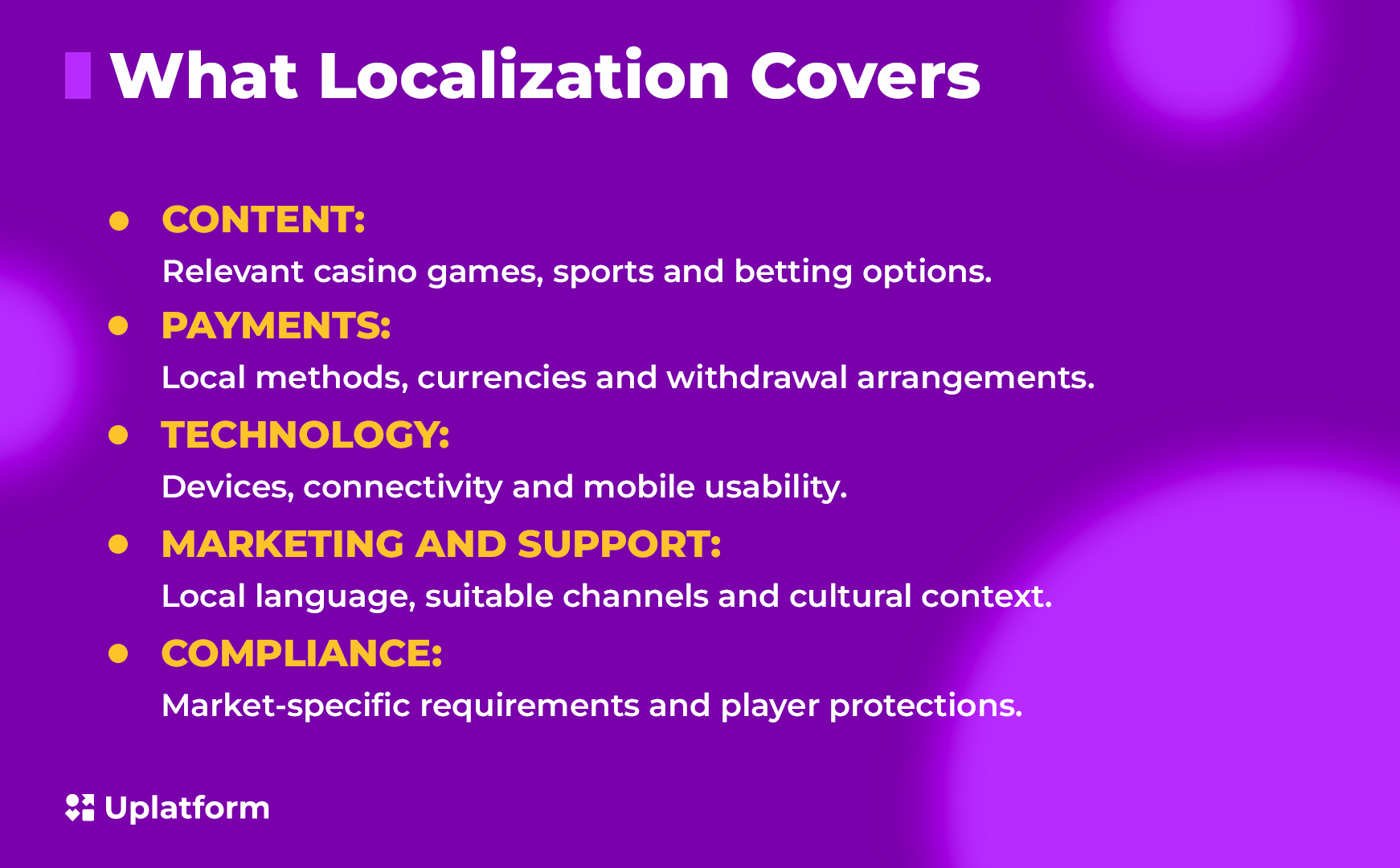
iGaming localization is the process of adapting an online casino, betting website or combined project to a market’s legal requirements, infrastructure and player preferences. It includes language, payments, content, marketing, support and business processes. The work starts with market research and continues through preparation, launch and ongoing performance review.
A translated website still leaves important decisions unanswered. Which payment methods should appear first? What games and competitions deserve space on the home screen? Which channels should the brand use to acquire and communicate with players? Who understands the local audience well enough to make those decisions?
The answers shape the project well before launch. They also change as the audience, available technology and local conditions develop. That makes iGaming localization an ongoing operating responsibility, with research informing what the team builds and performance informing what it changes next.
Why does iGaming localization need local research?
iGaming localization needs local research because regulations, payment habits, content demand and technology access vary between markets and within countries. Regional assumptions can overlook the audience a project intends to serve. Research should establish who those players are, how they access the product and which local conditions affect the operator’s offer and costs.
A shared language does not make two markets interchangeable. Neither does a common interest in football establish the right mix of leagues, esports, casino games and promotions. Operators need enough local detail to decide where resources should go, rather than importing a launch plan from the nearest familiar market.
Use several sources to build that picture: industry reports, local advisors, networking events, competitors, affiliates, streamers and social media. Each offers a different view. Combine them with research into player behavior, then revisit the findings as the project develops.
Group markets where their conditions are genuinely comparable, but record the differences that still require local decisions. Shared research can reduce duplicated work without forcing the same strategy onto every country.
How to plan iGaming localization across the project
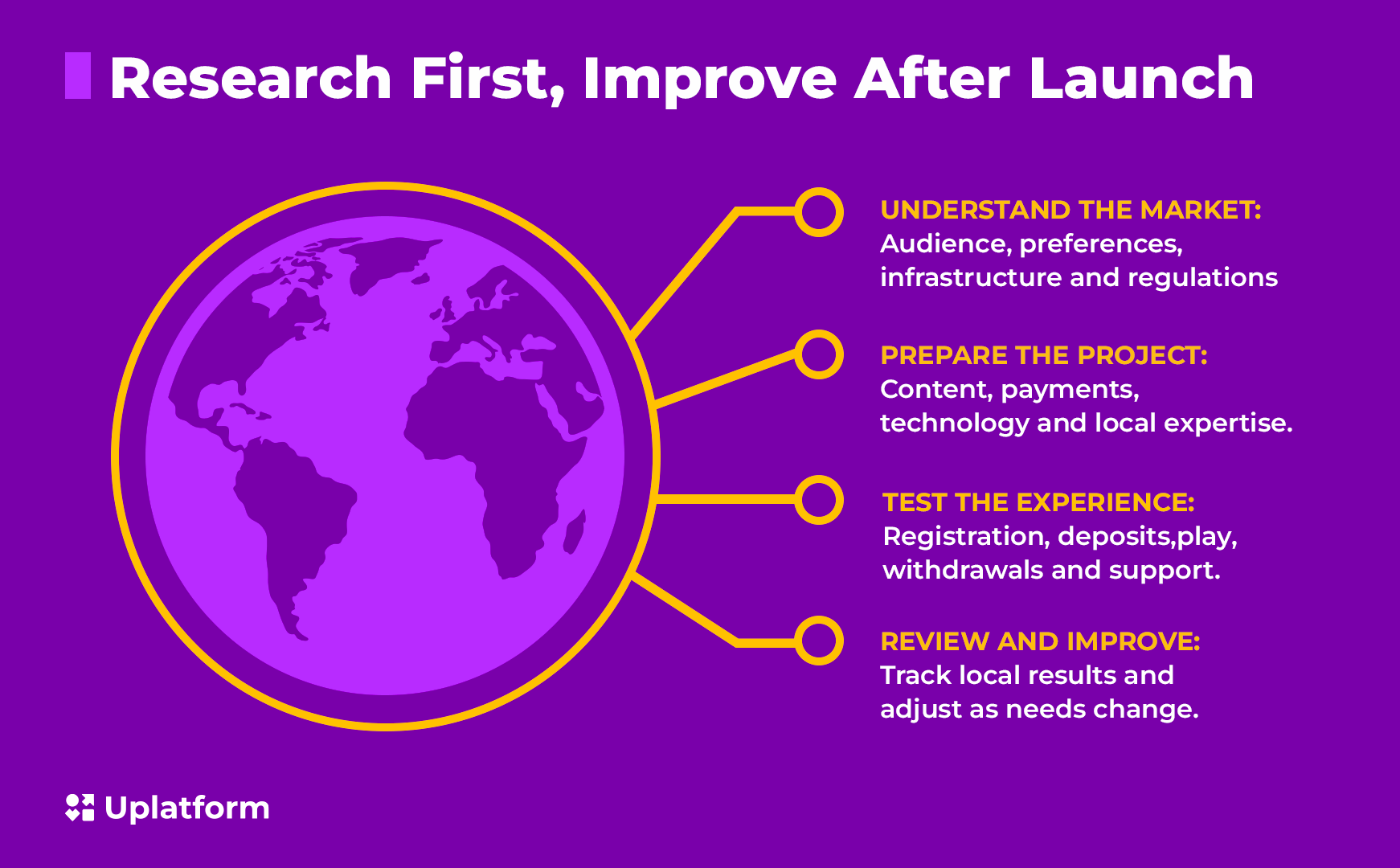
Plan iGaming localization by turning market research into decisions about compliance, technology, staffing, payments, content and marketing. Prepare those functions together, establish analytics before launch and review results by market afterwards. Local expertise should inform the setup, while player behavior and operating data guide later changes to the offer and business processes.
1. Research the audience and market conditions
Start with the audience the brand intends to reach. Identify preferred sports, leagues, casino categories and features, along with payment habits and communication preferences. Look at the cultural context too: local events, holidays and entertainment can influence which content and messages feel relevant.
Infrastructure belongs in the same research brief. Device access, connectivity and available payment services can affect account setup, verification, support and the practicality of the overall product. An online-only model and a project combining online operations with retail require different preparation.
Turn the findings into priorities. The team should be able to explain which content matters at launch, which payment methods need early integration and what technical conditions the product must accommodate. Keep collecting information after entry; the audience’s preferences are not fixed.
2. Establish the local operating requirements
Review the legal and commercial conditions before committing to the launch setup. Relevant areas include licensing, certification and testing, age restrictions, permitted games and bets, hosting, data protection, payment processing, anti-money-laundering requirements and advertising limitations.
These requirements affect more than the legal department. Account verification changes registration and support processes. Product restrictions shape the content offer. Advertising rules influence acquisition and promotions, while payment requirements affect how the cashier operates.
Build those dependencies into the project plan. Product, payments, marketing and support need a shared understanding of the requirements that affect their work. The objective is to prepare an operating model suitable for the jurisdiction, rather than leaving compliance adjustments until the website is finished.
3. Prepare the technology and local team
The technical setup should reflect how the audience accesses and uses the product. Review the interface, navigation, mobile experience and content presentation against local preferences and infrastructure. Game size and loading demands deserve attention where connection conditions make heavier content less practical.
For betting, localization can extend to odds formats, views, bet types and market presentation. Across the project, the technology also needs to accommodate relevant limits and account controls. Analytics should help the team understand which content players use and where the offer needs adjustment.
Bring local expertise into marketing, acquisition, retention and support. Native-language specialists with market experience can assess tone, cultural references, channel choices and service expectations. Choose a platform partner that understands the target market and can help translate those requirements into the project’s setup.
4. Prioritize relevant local payment methods
Payment selection affects access, conversion and operating costs. Research the methods the audience uses, the currencies the project needs and the rules governing financial operations. Familiar options should be easy to find; a long list of integrations does not establish that the cashier fits the market.
Prioritize the methods most relevant to launch rather than integrating every option at once. Expand the selection when transaction data or player demand identifies a worthwhile gap. For brands operating across markets, sort and present methods by geography so players see appropriate choices.
Compare integration through aggregators with direct arrangements involving local providers. Consider implementation effort, costs and commercial terms when deciding the balance. Cryptocurrency should also be assessed against local demand and requirements, rather than treated as a universal answer.
5. Balance global content with local demand
International content and local relevance can work together. The task is to establish which games, sports, events and features deserve priority for the audience, while keeping the broader offer useful.
For casino, research preferred game categories, providers, themes and features. The relevant mix may include live-dealer games, classic slots, crash games or skill-based content, depending on the audience. Assess demand and technical suitability together; a popular category still needs to work on the devices and connections players use.
For betting, review local and international competitions alongside sports, esports, bet types and odds formats. Familiar presentation can matter as much as availability. A player who understands the content should also be comfortable finding and using it.
Use competitor reviews, affiliates, streamers, social media and player analytics to inform the selection. iGaming localization should also shape content placement, accepted currencies and relevant account settings. Revisit the mix as sporting calendars, entertainment trends and player interests change.
6. Adapt acquisition, promotions and retention
Choose acquisition channels with people who understand the local market. Search, affiliates, social media and streamers may play different roles across audiences. Allocate resources according to local opportunities and results, rather than assuming that a channel successful elsewhere deserves the same budget.
Review promotional imagery, colors, typography, wording and cultural references. Local holidays and events can inform campaigns, but the message and offer need to make sense together. Translation alone cannot establish that a promotion feels appropriate to its audience.
Plan retention before launch. Establish suitable communication channels and a basic approach for the wider player base, then consider the additional service and management needs of VIP segments. Keep the applicable player-protection requirements within those decisions.
Our CRM tools support analysis and player segmentation. Use the information to refine content recommendations, offers and communication by market and player behavior. Local knowledge helps the team decide what to test; reporting helps it judge the result.

7. Measure results and keep adapting
Set up analytics and define the measures before the project launches. Review revenue, retention and churn by market so the team can see where its local decisions are producing useful results and where further work is needed.
Different markets may need different targets. Product preferences, acquisition conditions and operating costs can vary, making a single set of targets a poor guide for allocating resources. Review performance in its local context before copying another market’s approach.
The findings should lead to practical changes: a revised content mix, different payment priorities, better segmentation, a more suitable communication channel or a review of provider costs. Our Back Office tools provide reporting and analytics that can support that work.
Keep reviewing the research too. New technology, changing demographics and cultural trends can alter what players expect. iGaming localization remains useful when the business continues learning after entry.
Metrics for reviewing localization performance
Choose measures that help explain whether the local offer attracts players, supports repeat activity and produces value. The same headline result can have different causes across markets, so review the figures alongside content usage, campaigns and operating costs.
| Metric | What it shows | What to review locally |
|---|---|---|
| Gross gaming revenue or GGR | Total stakes minus player winnings, before bonuses, taxes and operating costs. | Which products and content contribute, and how the result relates to promotional and operating costs. |
| Retention rate | The share of a defined player group that remains active or returns within the chosen period. | Whether content, communication and support meet the audience’s needs. |
| Average revenue per user or ARPU | Revenue divided by the users included in the same reporting period. | Differences in player value, product mix and acquisition sources, using consistent revenue and user definitions. |
Player outflow and average revenue per paying user can add detail where they support a specific decision. Keep definitions consistent and report the period being measured. A dashboard is useful when the team can connect a change in performance to something it can investigate or improve.
Connect the local decisions across the business
Our full-service platform brings casino and betting content together with localization tools, payment services, CRM and operational reporting. That gives operators a basis for preparing the whole project around the target market, rather than treating each local requirement as a separate addition.
We also work with operators on market-entry and traffic questions. Start the discussion with the audience, content priorities, payment needs and operating requirements. Those details help establish which solutions and services fit the project.
The launch is the beginning of the local operating cycle. Keep reviewing what players use, which channels bring suitable audiences and where costs can be improved. A project stays relevant through those decisions, rather than through a one-time translation exercise.
Want to learn more about localization? Explore our localization guide.