iGaming Onboarding: Reduce Friction Before the First Deposit
TL;DR: Improve first deposit conversion by removing unnecessary steps between registration and payment. Show relevant local payment methods, retain valid form entries and explain verification outcomes. Track field errors, payment handoffs and successful deposits by market and device. Keep required age, identity, anti-money laundering and responsible-gambling checks intact while making every failure recoverable.
A player completes registration, opens the cashier and finds no payment method they recognize. Another uploads an identity document, gets a rejection and cannot tell what to change. Both appear in the same first-deposit report. To improve conversion, the team needs to identify the broken step and test a specific repair.
What is onboarding friction in iGaming?
Onboarding friction is avoidable effort, uncertainty or failure between registration and a player’s first successful deposit. It can appear in a form, verification step, mobile handoff or cashier. Required checks are not friction by default; unclear instructions and dead ends make them harder to complete.
A registration can succeed technically and still deliver no commercial value. Players leave when the campaign promise disappears, when the payment method is a stranger or when a failed input offers no way out. Measure where players stop, repeat work, wait without a status or ask support for an answer the product should provide.
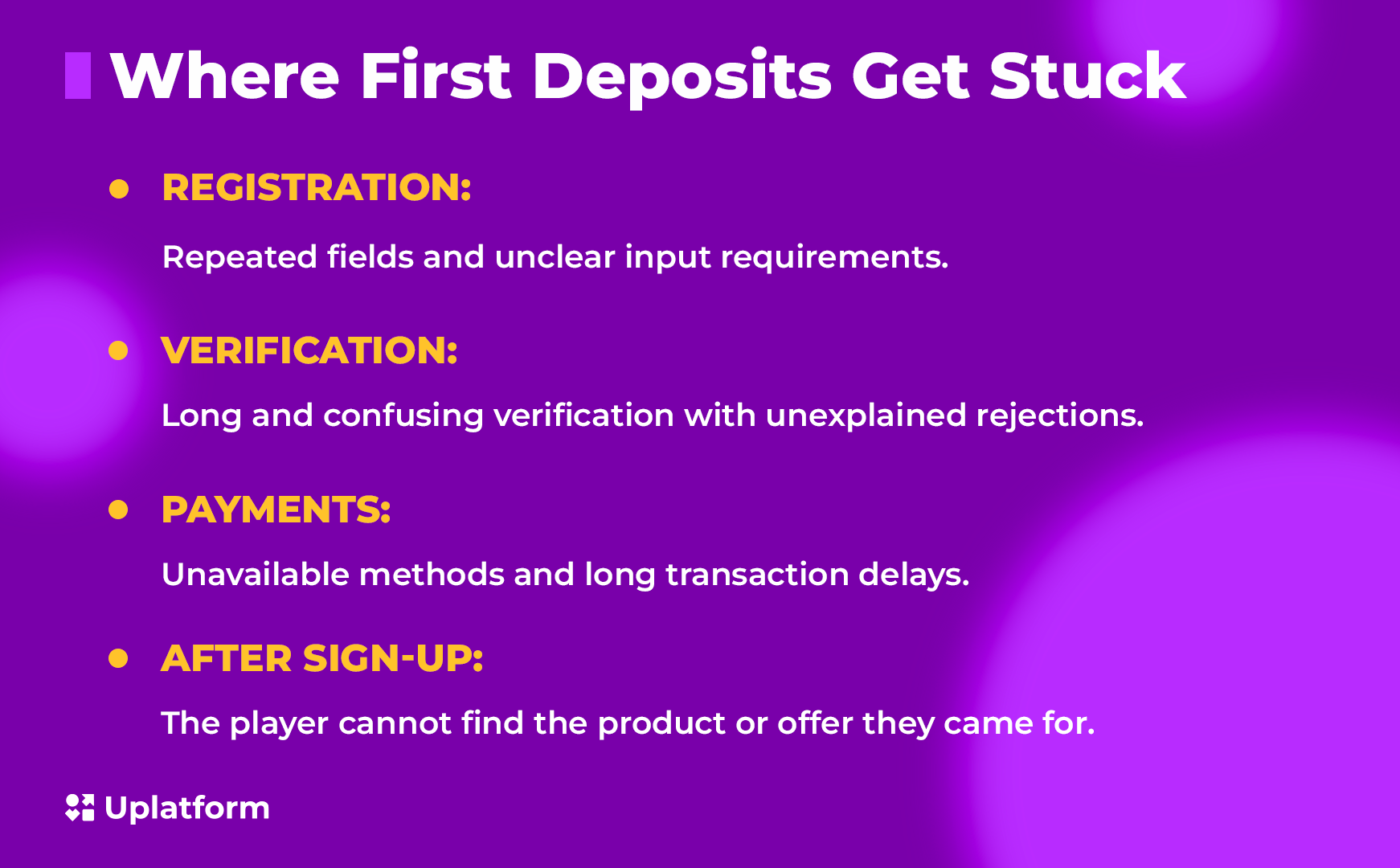
Table 1. What an onboarding signal may be telling you
| What you see | Likely friction | Where to look first |
|---|---|---|
| Lots of starts, few completions | Form, validation or a technical failure | Field-level drop-off and the mobile flow. |
| Registrations, few deposit attempts | Weak value after sign-up, the offer or the payment choice | The promise, the first screen and the available methods. |
| Plenty of attempts, few successes | PSP, limits, authentication or currency | Segment by method, error code, market, currency and handoff. |
| Mobile trails desktop | Keyboard, layout, upload, performance or session problems | Run the flow on real devices and slower networks. |
| High verification resubmission | Unclear document rules or rejection messages | Instructions, status messages and support tags. |
| One market underperforms | Localization, payments, disclosures or configuration | Compare its flow and method matrix with a similar market. |
Why do players stop before the first deposit?
Consider a player who signs up to bet on a specific match. The registration works, but the landing screen hides that event. At the cashier, their usual local method is missing. If the payment redirect then returns an unexplained error, a completed registration tells the team very little. Each handoff needs its own event and an owner who can fix it.
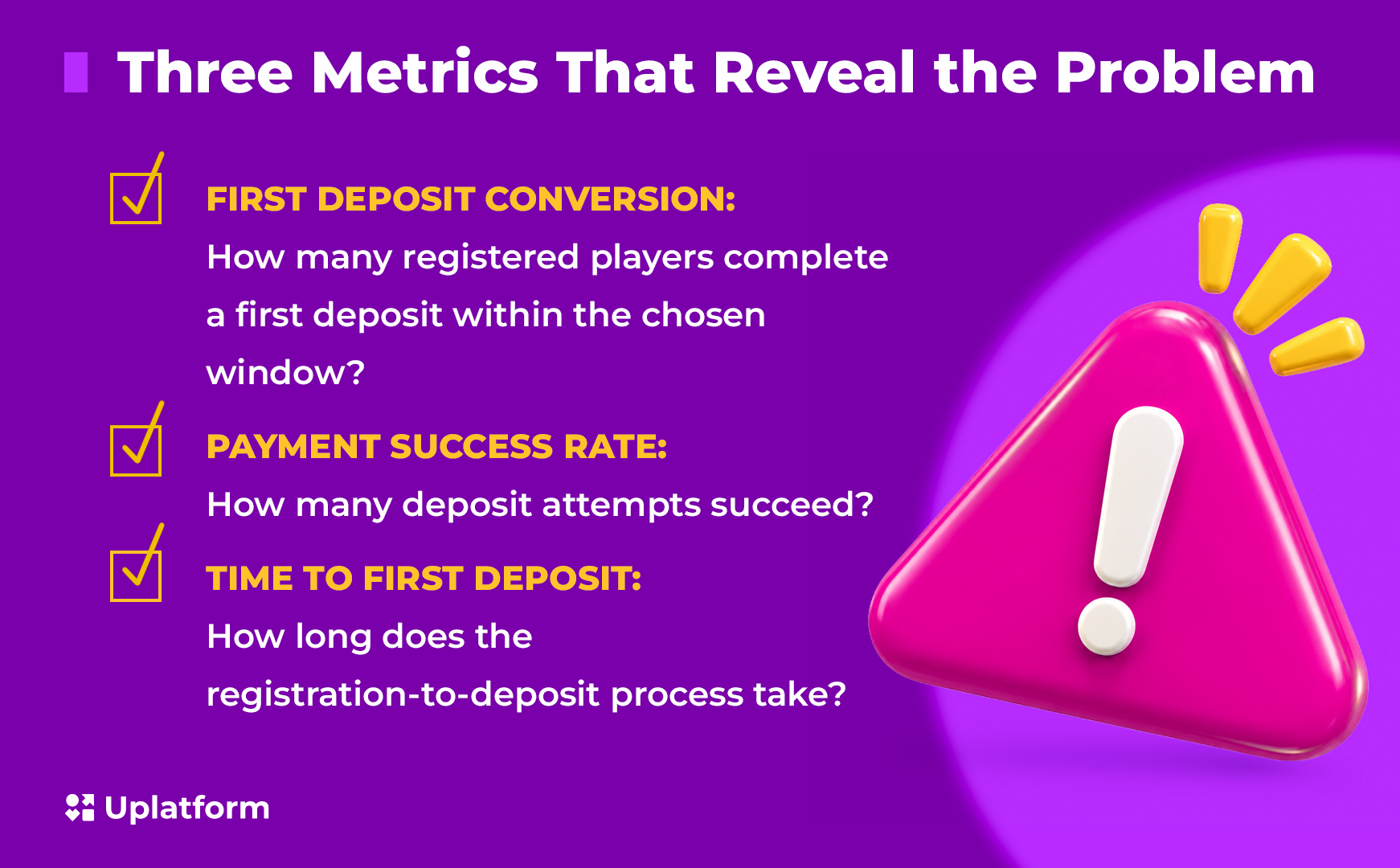
The same headline conversion rate can hide very different problems. The table shows where to investigate first; confirm the cause with event data and support records.
Common onboarding failures and how to fix them
Registration fields and validation errors
A rejected date of birth and an unavailable identity service are not the same problem. Show the accepted format when an entry is invalid; explain the outage and next step when a service fails. Keep information the player already entered. The W3C form validation guidance supports clear correction instructions, but the practical test is whether the player can recover without starting again.
Mobile sessions and external handoffs
A desktop browser narrowed to phone width will miss a real mobile failure. Test keyboards, autofill, document uploads, slow networks and switches to banking apps or payment pages. Does the session survive when the player returns? Can they resume from the same step? A polished screen does not help if the payment handoff erases everything.
Verification status and rejected documents
When a document upload fails, the player needs more than a red icon. Explain which documents are accepted, what the image must show and whether the submission is received, under review or rejected. A resubmission request should identify the specific problem and preserve the account context. Make support able to see that status, too.
Payment choices and transaction outcomes
At the cashier, show methods available for that market, currency and account. State fees, limits and authentication requirements before confirmation. Separate pending deposits from declined ones, and prevent duplicate charges during retries. The W3C guidance on notifications reinforces a simple rule: every outcome needs clear feedback.
As Eduard Ammosov, Uplatform Payments Business Development Manager, explains:
“It’s important to focus on the most popular payment methods, which may be just 2–3 options and will vary by country.”
Put the relevant methods first, not every method the operator can technically offer.
Localization beyond translation
A translated registration page is not a localized cashier. Language, currency, payment habits, disclosures and support must fit the market together. Uplatform supports 68+ languages, including less commonly served language options, and 600+ payment solutions. That range lets operators choose familiar methods rather than displaying unavailable ones. Review the market-specific flow when a new method or requirement changes.
Campaign promises after sign-up
If a campaign promotes a particular league, game or offer, the first screen after sign-up should lead the player there. Explain any eligibility rules in plain language. Otherwise, the experience loses the reason the player registered, even when every form and payment field works.

How to reduce onboarding friction before first deposit
1. Map the complete player journey
Record each page, field, verification request, redirect, payment attempt and confirmation. Include what happens when a provider is slow or the player returns from an external app. Map each path by market and device, not only the ideal desktop journey.
2. Prioritize the failure that blocks deposits
Compare field completion, verification resubmissions and deposit attempts. A large registration-to-cashier gap calls for a different fix than repeated payment rejections. Look at unique players and individual attempts separately, then select one high-impact repair before redesigning the entire flow.
3. Give each issue a cross-functional owner
Product owns form behavior; payments investigates provider responses; support explains the next step; compliance confirms required checks. Bring their evidence together so the player does not have to repeat the same problem to three teams. Record the issue, action, owner and resolution.
4. Test the repair on actual devices and markets
Reproduce a rejected field, interrupted upload, pending transaction and payment-provider return. Include slow connections and local payment methods. A fix is complete when players can recover from a failed step without losing earlier information or bypassing a required control.
5. Compare first deposits before and after
Use comparable registration cohorts and a fixed observation window. Segment by source, market, device and method. If first deposit conversion rises while payment success falls, investigate retry volume before calling the change a win. A useful dashboard explains what moved and why.
Keep required verification and protections intact
Removing onboarding friction does not mean removing required checks. Explain age, identity, location and source-of-funds requests before they interrupt the player. Show the accepted evidence, review status and recovery path. Confirm the sequence with compliance for the target market, and keep responsible-gambling controls accessible throughout the journey.
How Uplatform connects onboarding and payments
Uplatform Turnkey brings sportsbook and casino content, localization and operational tools together. Upayment provides 600+ payment solutions for market-specific cashier choices. Utools adds CMS, CRM and Back Office capabilities so teams can manage content, player information, payments and reporting in one system.
When a first deposit stalls, Back Office transaction reporting and the payment setup help the operator investigate the handoff. Uplatform also offers 24/7, two-line support: one line for the operator’s team and another for players. That joined-up setup helps the relevant teams trace an interruption and move it toward resolution rather than stitching together disconnected systems.
Pre-launch onboarding checklist
Before launch, test the entire journey in the target market. Keep evidence for the scenarios below and assign an owner to any unresolved issue.
- Registration works on real desktop and mobile devices, including slow connections.
- Field errors explain the fix and keep valid information already entered.
- Verification requests, resubmissions and account-status updates are understandable.
- The campaign promise matches the first screen after sign-up.
- Local payment methods and success, pending, failure and retry states are tested.
- Players can return from payment providers or external apps without losing progress.
- Support has context; reporting separates markets, devices, methods and unique players.