Pocket-Sized Play: Brazil’s Mobile Revolution in iGaming
TL;DR:
Brazil’s iGaming market is being reshaped by the rise of mobile use. With affordable smartphones, better internet, and a tech-savvy generation, online betting has moved entirely to the palm of the hand. From social habits to infrastructure, this mobile-first shift is defining how Brazilians play, pay, and engage with iGaming. Here’s how mobile became Brazil’s main arena for digital entertainment — and what that means for operators.
A Nation That Went Mobile-First
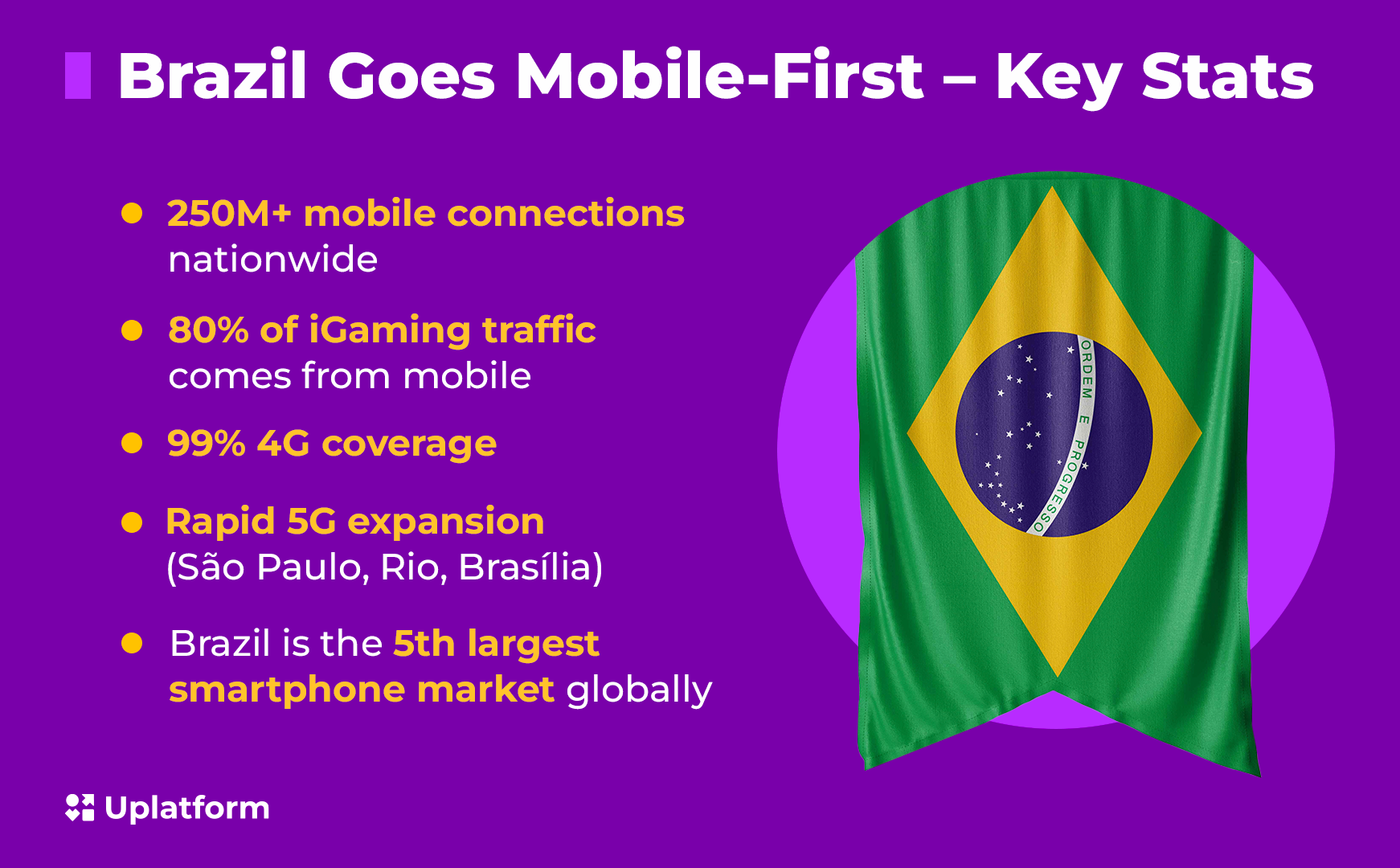
Few markets illustrate mobile dominance like Brazil. For many Brazilians, the smartphone isn’t just a device — it’s their main connection to the internet, entertainment, and even work. Over 250 million mobile connections and high 4G/5G coverage have made it the fifth-largest smartphone market globally.
This is a country that skipped the desktop era almost entirely. For millions, the first and only screen for betting and gambling is mobile. That cultural leap has defined the way Brazilians approach iGaming — fast, social, and always within reach.
Why Brazil Became a Perfect Ground for Mobile iGaming
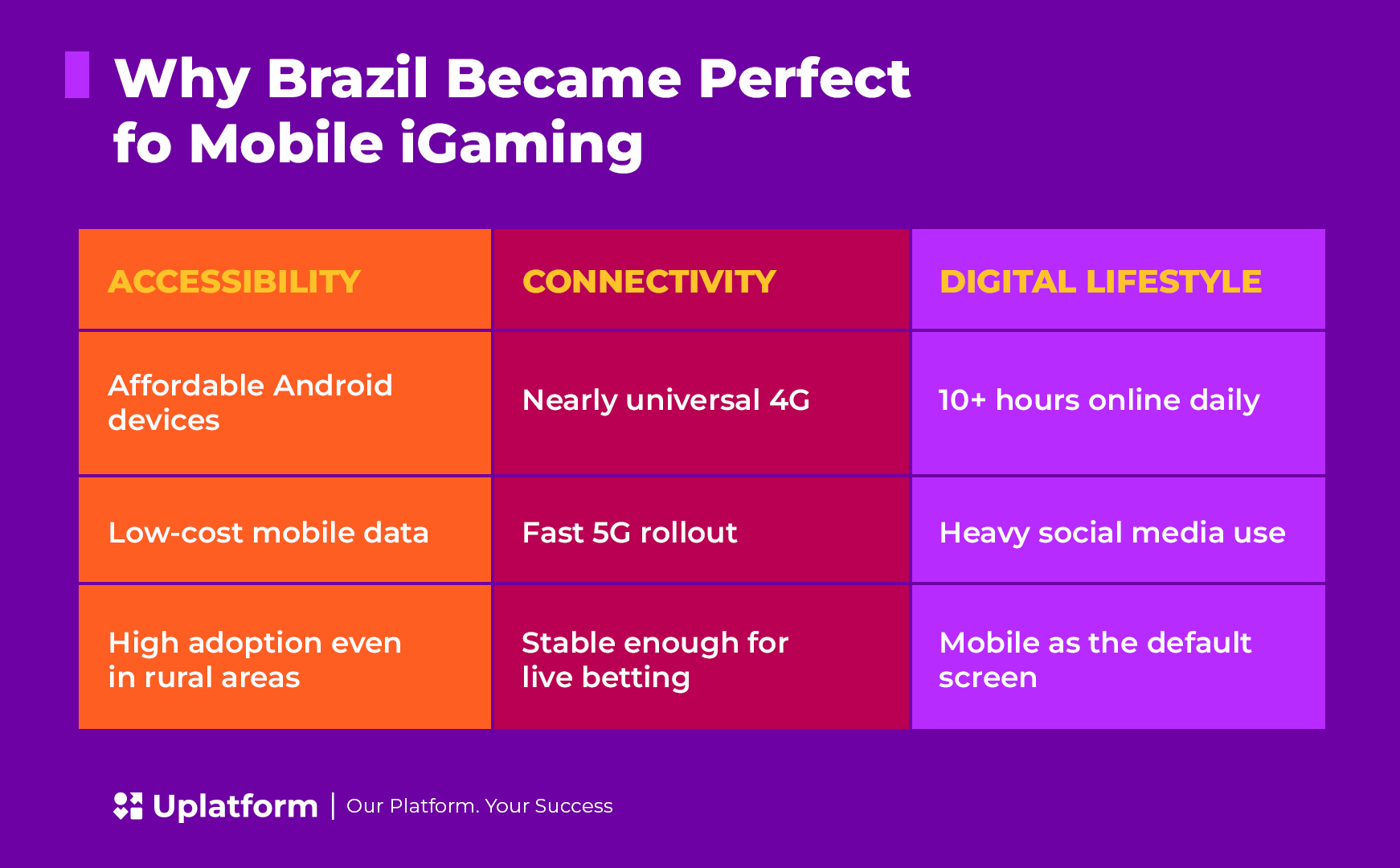
Three forces fuel this mobile revolution:
- Accessibility: A flood of budget Android devices and data-friendly plans made smartphones nearly universal, even in rural areas.
- Connectivity: Investment in broadband and mobile networks made live betting viable from virtually anywhere.
- Digital lifestyle: Brazilians spend over 10 hours a day online, and most of that is through their phones — social media, streaming, and increasingly, betting.
This combination turned iGaming into a pocket-sized experience where players place bets or spin slots instantly — anytime, anywhere.
The New Habits of the Brazilian Player
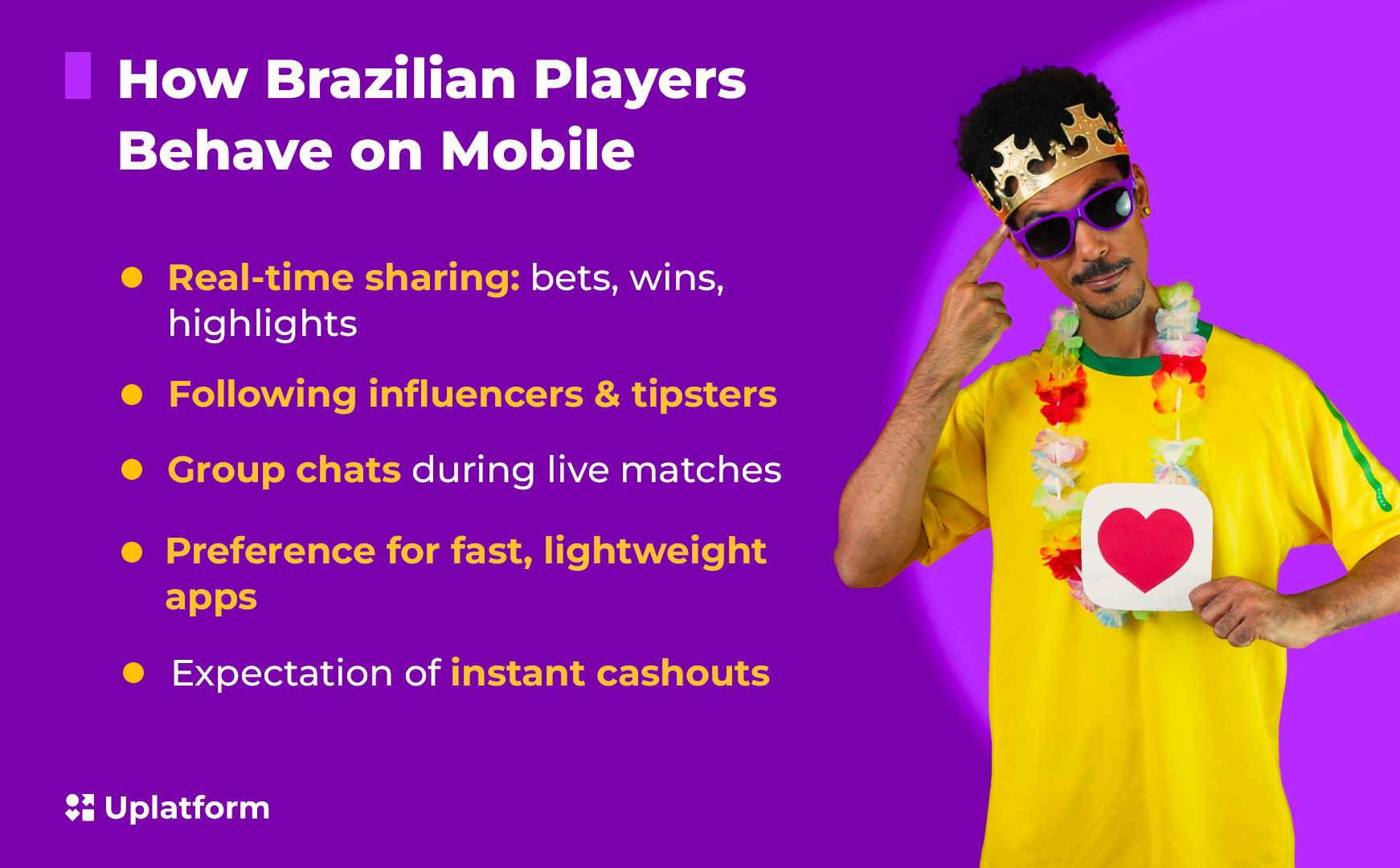
Mobile use in Brazil isn’t just about convenience, it’s woven into everyday culture. For younger audiences, mobile gaming works almost like social currency. They share results the moment they happen, follow creators they trust, and jump into group chats during live matches. Betting naturally blends into this behaviour, becoming another layer of digital entertainment that sits right alongside sports fandom and social media.
These players expect everything to happen now. Live odds that update instantly, betting UI that feel intuitive, cashouts that arrive instantly. And because most of them rely on mid-range phones and unstable connections, the apps that succeed are the ones that stay fast, lightweight, and reliable even under pressure. In this reality, the overall experience isn’t just a nice addition, it’s as important as the betting product itself.
Infrastructure That Powers Mobile Play
Mobile iGaming’s rise is tied to Brazil’s infrastructure boom. The country’s 5G rollout began in 2022 and now covers major cities like São Paulo, Rio de Janeiro, and Brasília. Meanwhile, 4G networks reach nearly 99% of the population.
This coverage allows operators to deliver high-quality streaming, live stats, and immersive casino content without lag. Combined with widespread smartphone penetration, it’s no surprise that over 80% of iGaming traffic in Brazil now comes from mobile devices.
Local Payment Methods
Payments are an important part of the story, but not the whole story. Yes, Pix revolutionized digital transactions — offering instant, 24/7, zero-fee transfers used by more than 160 million people — but it’s part of a broader financial evolution.
Brazil’s players use e-wallets, mobile banking apps, and prepaid vouchers just as actively. The trend isn’t about one method; it’s about frictionless transactions that match mobile habits. Players expect instant deposits, smooth withdrawals, and transparent verification — without having to deal with support.
For operators, that means adapting payment flows to local behavior, not just plugging in Pix. Supporting multiple trusted options and offering clear, localized onboarding builds the credibility that drives long-term retention.
How Operators Can Win in Brazil’s Mobile Market
Success in Brazil’s mobile iGaming environment depends on localization and optimization, not just technology.
To connect with Brazilian players, operators need to:
- Build mobile-first: lightweight apps and responsive sites that run smoothly on varied devices and networks.
- Localize content: Portuguese language, culturally relevant visuals, and sports like football, basketball, and MMA.
- Prioritize UX: fast navigation, visible odds, quick withdrawals, and clear limits.
- Adapt payments: integrate instant local options (Pix, wallets, vouchers) and support transparent KYC.
- Emphasize responsibility: deposit caps, reminders, and local responsible-gaming resources.
The brands that succeed aren’t necessarily the biggest — they’re the ones that feel Brazilian.

Regulation and Market Outlook
Brazil’s regulated betting market entered a new phase in 2025, opening a structured licensing system. Enforcement is still ramping up, but the direction is clear: tighter oversight, consumer protection, and accountability.
Operators must now navigate new advertising rules, payment verification standards, and social-responsibility obligations. While these bring added complexity, they also push unlicensed competition out and increase player trust — key ingredients for sustainable growth.
In a country with 200+ million potential users and unmatched mobile adoption, regulation isn’t a barrier; it’s the foundation for long-term confidence.
What Brazil Teaches the Global iGaming Industry
Brazil’s mobile revolution is more than a regional success story — it’s a preview of where global iGaming is heading. In markets where mobile has already replaced desktop, players expect immediacy, flexibility, and culturally aligned experiences.
For operators expanding into Brazil or similar regions, the takeaway is clear: mobility isn’t a feature; it’s the default.
Where Uplatform Fits In
To thrive in a fast-moving market like Brazil, operators need a partner who understands mobile performance, localization, and compliance.
Uplatform provides a turnkey solution that helps brands go mobile-first from day one — optimized interfaces, scalable sportsbook and casino modules, and full support for Brazilian Portuguese and local payment systems.
It’s everything an operator needs to meet the expectations of Brazil’s mobile players — and to keep up as the market evolves.
Other news
-
 From Operator Wish List to Everyday Reality
28.09.2026
-
- Player Engagement in iGaming: Operator Guide
01.09.2026
- SEO & AEO Strategies for iGaming in 2026
18.08.2026
-